
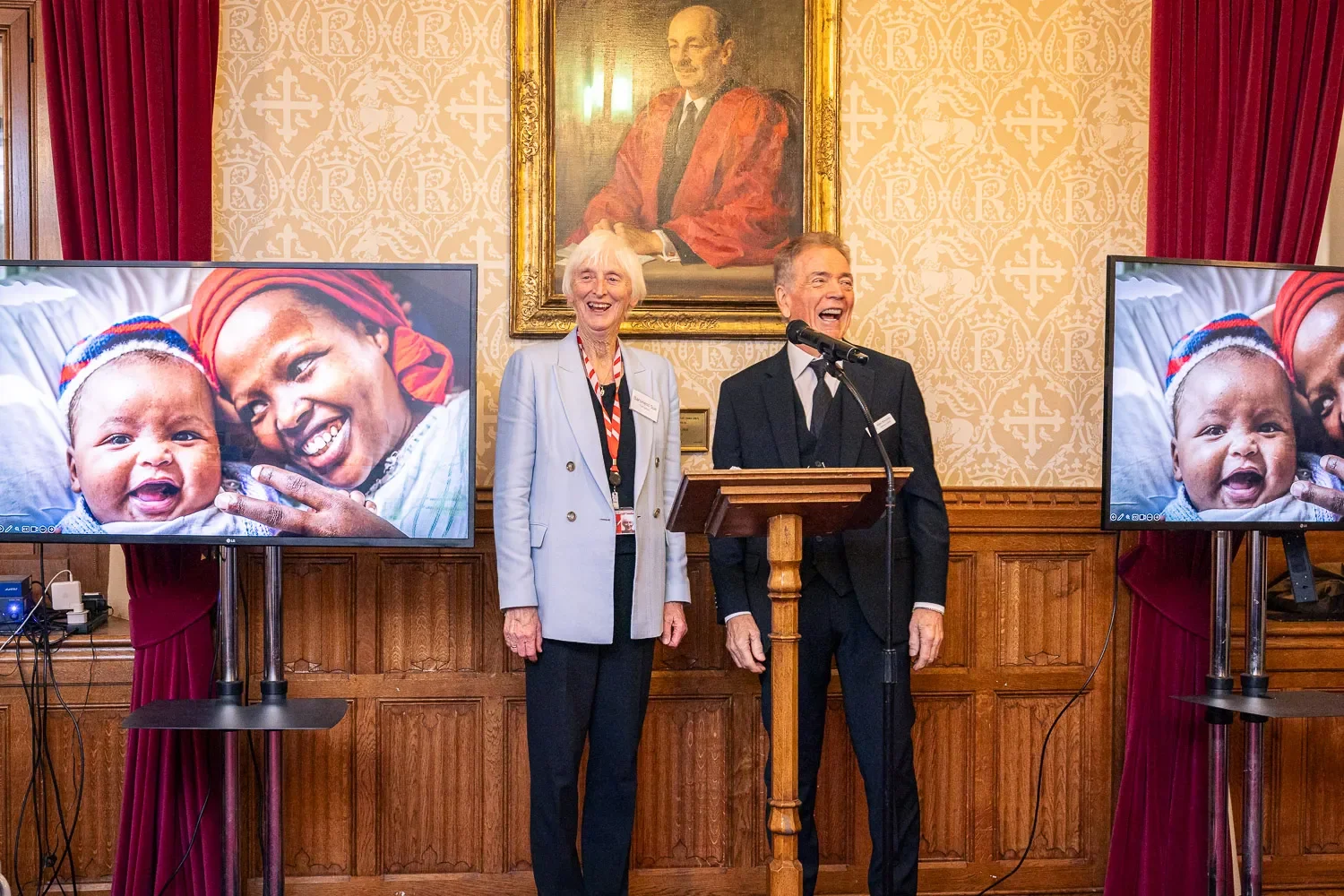
Baroness Campbell and the evening’s host, Nigel Brooksby, Chair of the Board of Trustees, Catherine Hamlin Foundation International (UK), sharing a laugh at the podium.
“Don't forget the printed invitation, or I’m not getting in.”
That’s the rule at the House of Lords. Security needs a physical, printed invitation and photo ID, and I wasn’t about to leave either at home. I checked my bag, then checked it again, before I left.
On Thursday 22 October I was the official photographer for the UK launch of the Catherine Hamlin Foundation International at the House of Lords. It’s one of those jobs I’ll be talking about for a long time.
The charity and the evening
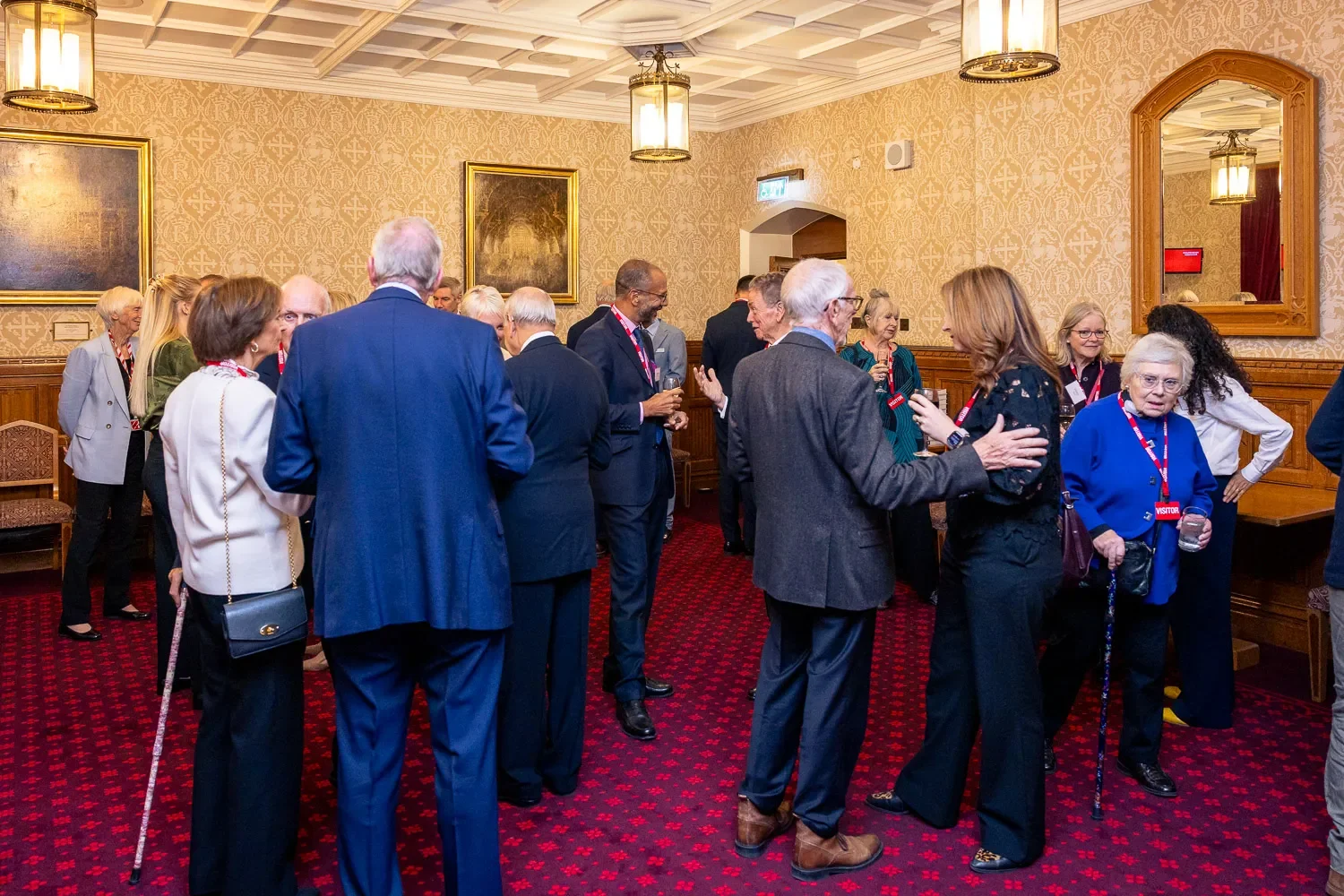
The room filling up. Wide shots like this set the scene for the press.
Catherine Hamlin Foundation International (CHFI) has been set up across the UK and Europe to raise money for Hamlin Fistula Ethiopia. For more than 65 years, Hamlin has treated women living with obstetric fistula, a devastating injury caused by long, obstructed labour. More than 80,000 women have been treated so far, free of charge. Their newest work, Project Zero, aims to make Ethiopia fistula-free.
The launch was a private reception from 6.30 pm to 8.30 pm, by kind permission of Baroness Campbell of Loughborough DBE and hosted by Nigel Brooksby, Chair of Trustees. Around 50 to 60 guests came: trustees, supporters, philanthropists and members of the Hamlin team who had travelled from Ethiopia. There were also video messages of support from the Hon. Julia Gillard, former Prime Minister of Australia, and Dr Tedros Adhanom Ghebreyesus, Director-General of the World Health Organization.
The brief from organiser Alison Jefferis was clear. Elegant, authentic and journalistic. Sharp, expressive shots of the keynote speakers. Groups of trustees and VIPs. Natural conversations between the Ethiopian team and UK supporters. CHFI branding in frame. And a set of images ready for a press announcement the next morning.
Arriving early, on purpose
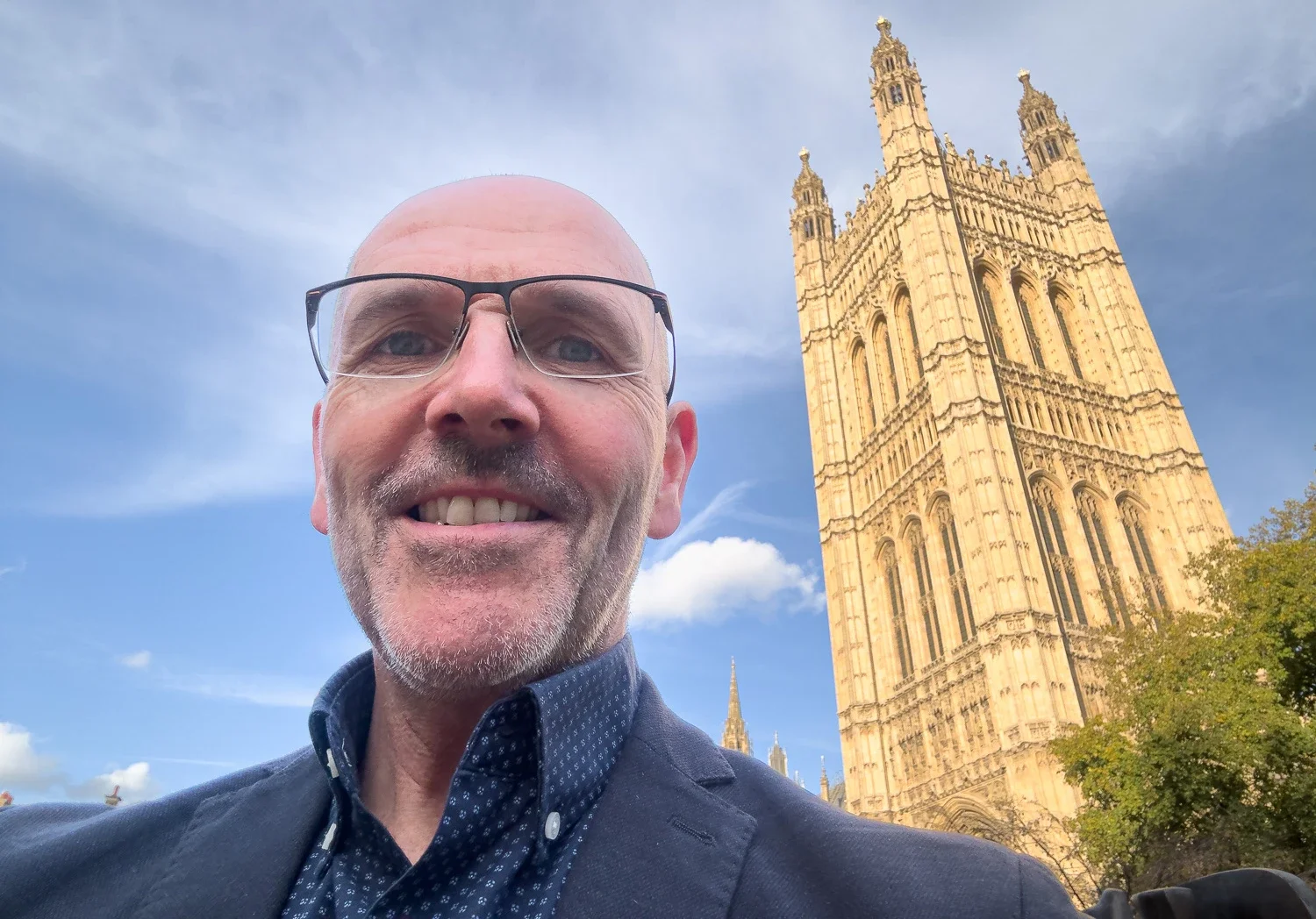
This is me outside the House of Lords arriving early, a bit nervous and very excited about taking pictures at the event.
I’d never worked at the House of Lords before, so I got there an hour and a half early. I wanted time for anything that could go wrong: getting lost, a queue at security, a problem with my paperwork.
Security was exactly like an airport. My camera bag went through the scanner, and off came my jacket, watch, phone and belt. I was braced for a long wait. In fact, it was quick and painless, which meant I had time to spare.
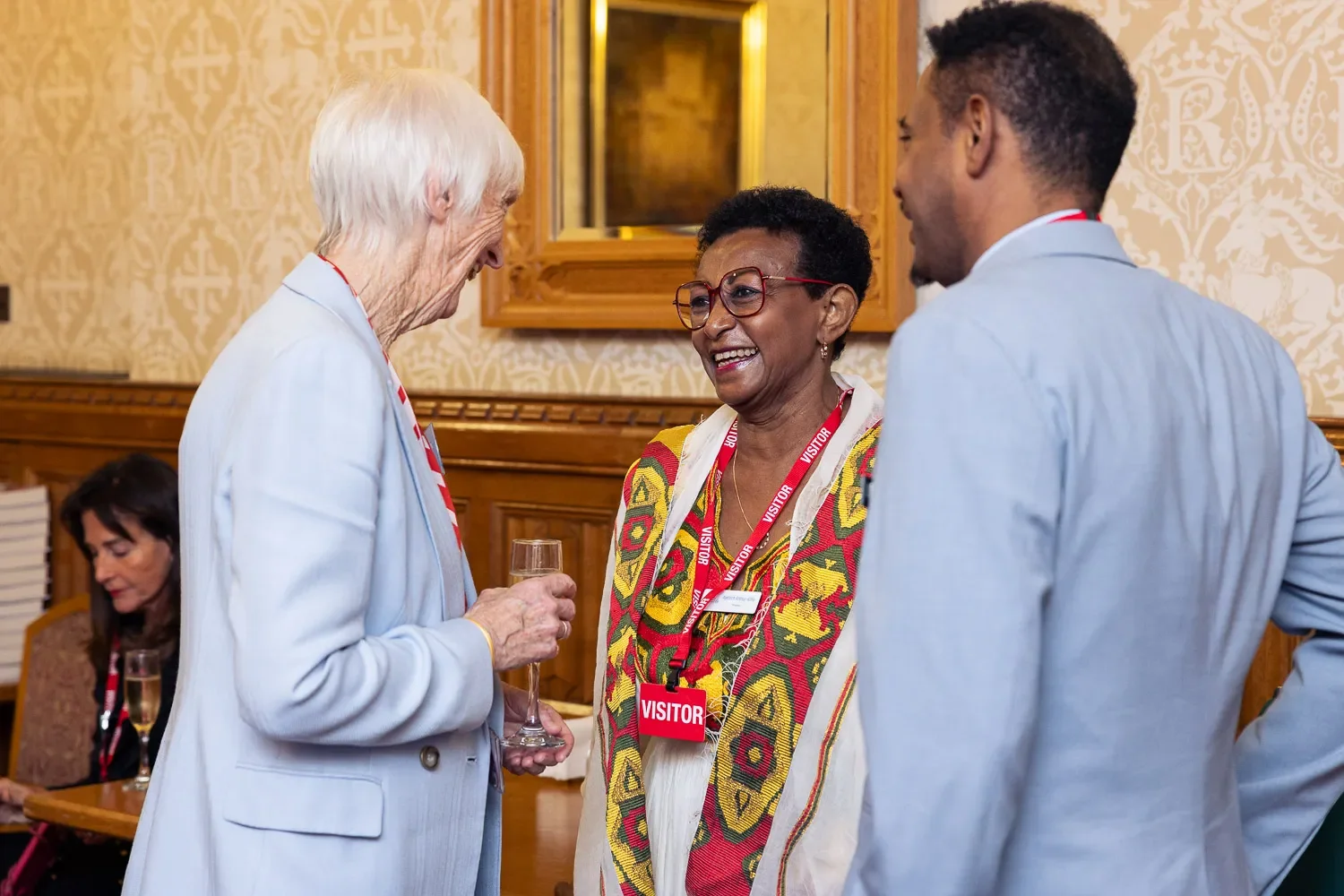
A real laugh, not a posed one. Baroness Campbell of Loughborough DBE and Dr Solomon Abebe, General Manager, Hamlin Fistula Ethiopia, chat to a guest in traditional Ethiopian dress.
I spent some of it in the courtyard, just looking up. All those doors and windows, and all the people who’ve walked through them over the centuries. It’s not often a location stops me in my tracks, but this one did.
The room wasn’t quite ready, so there was a bit of waiting around. That turned out to be useful. The hosts and organisers started to arrive, and I got to say hello before the evening began. It sounds like a small thing, but people relax in front of the camera once they’ve already met the person holding it.
Reading the room
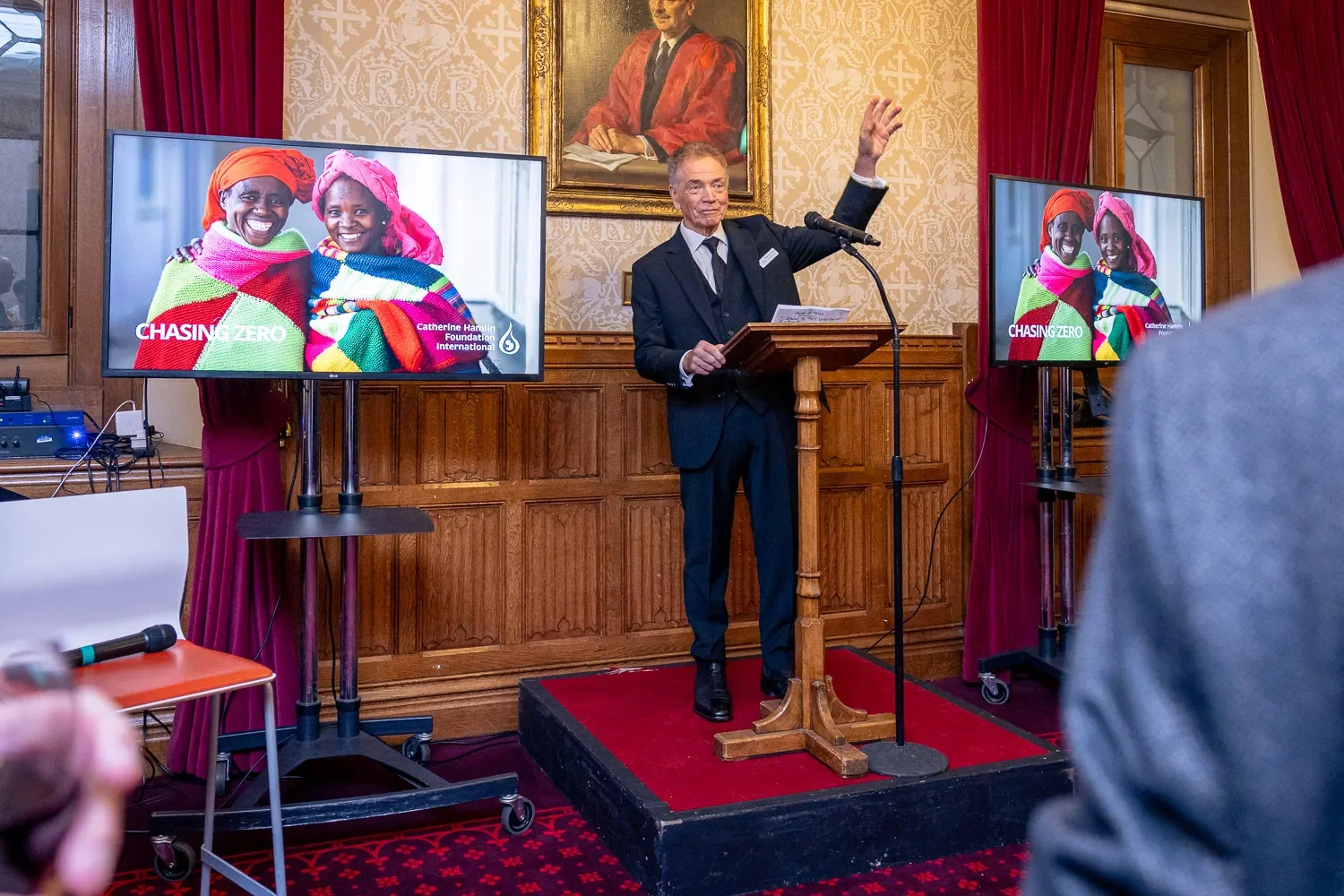
Nigel Brooksby, Chair of the Board of Trustees, Catherine Hamlin Foundation International (UK), at the podium. Speeches with the branding in frame, so every shot tells you who and why.
Once we were let in, I had my first proper look at the space. Where would the speeches happen? Where was the light coming from? How much room would I have to move without getting in anyone’s way?
This was one shoot where nothing could go wrong with the kit, so I brought two camera bodies, four lenses, a speedlight on each camera, and plenty of spare batteries and memory cards. I ran a 24-70mm lens on one camera for the room, the groups and the conversations. The other had a 70-200mm, which let me get tight, expressive shots of the speakers from the back of the room without standing in front of anyone.
The room lighting wasn’t bad, but flash made it much better. The trick is to bounce it. Instead of pointing the flash straight at someone’s face, I angle it at the ceiling or a wall. The light spreads out and comes back softer, more like light from a big window than a torch. It’s far more flattering, and guests barely notice it.
Before anyone arrived, I took a few test shots. That let me set the colour temperature, so skin tones and the warm wood panelling looked natural rather than orange. It also let me settle my exposure settings and check how the bounced flash behaved off those walls and ceilings.
Two hours, 50 to 60 guests
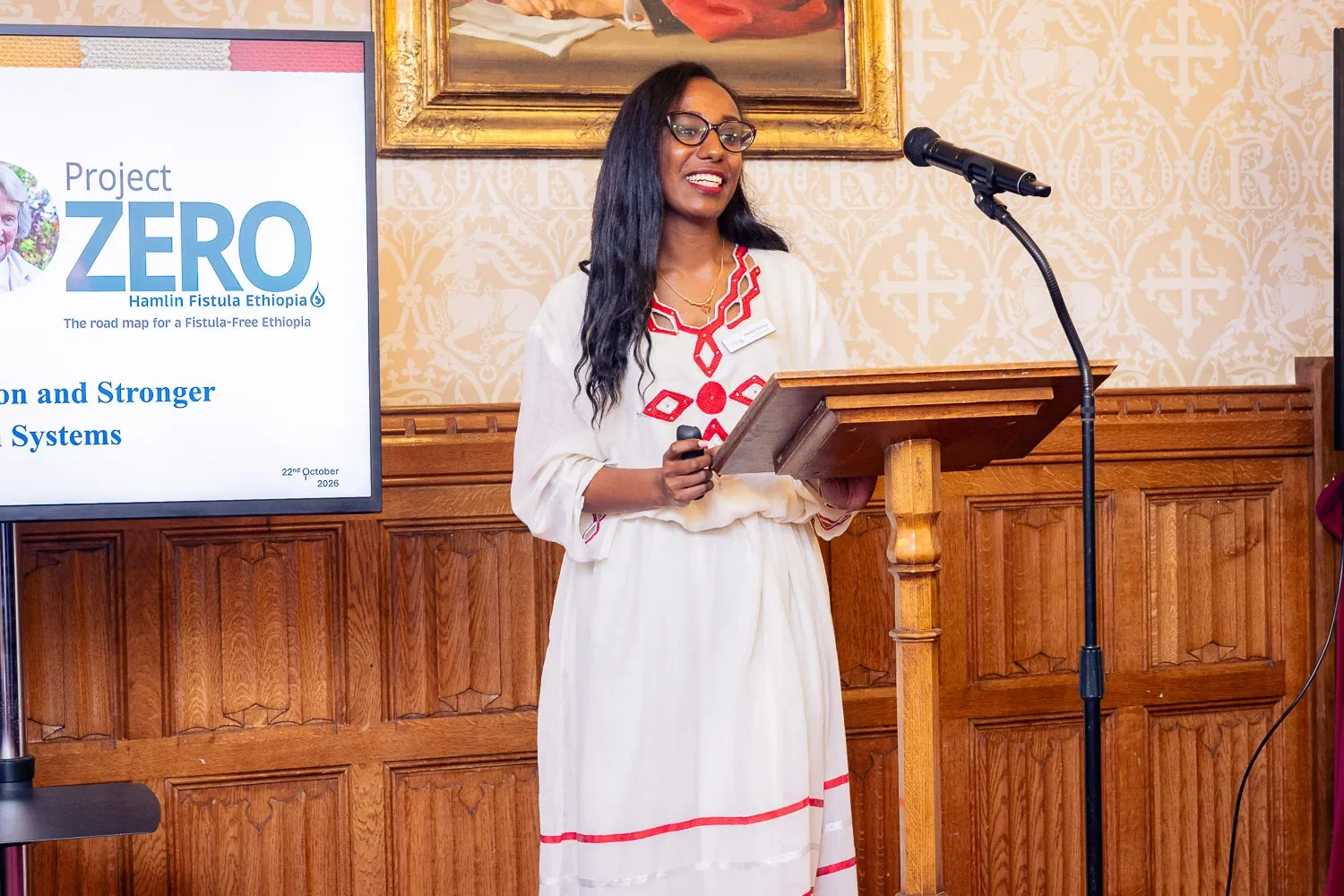
Hanna Tesfaye, Project Zero Program Manager, Hamlin Fistula Ethiopia, presenting Project Zero.
From 6.30 pm, I worked my way quietly around the room. Most of what I do at an event like this is candid: people talking, laughing and catching up, without anyone feeling watched.
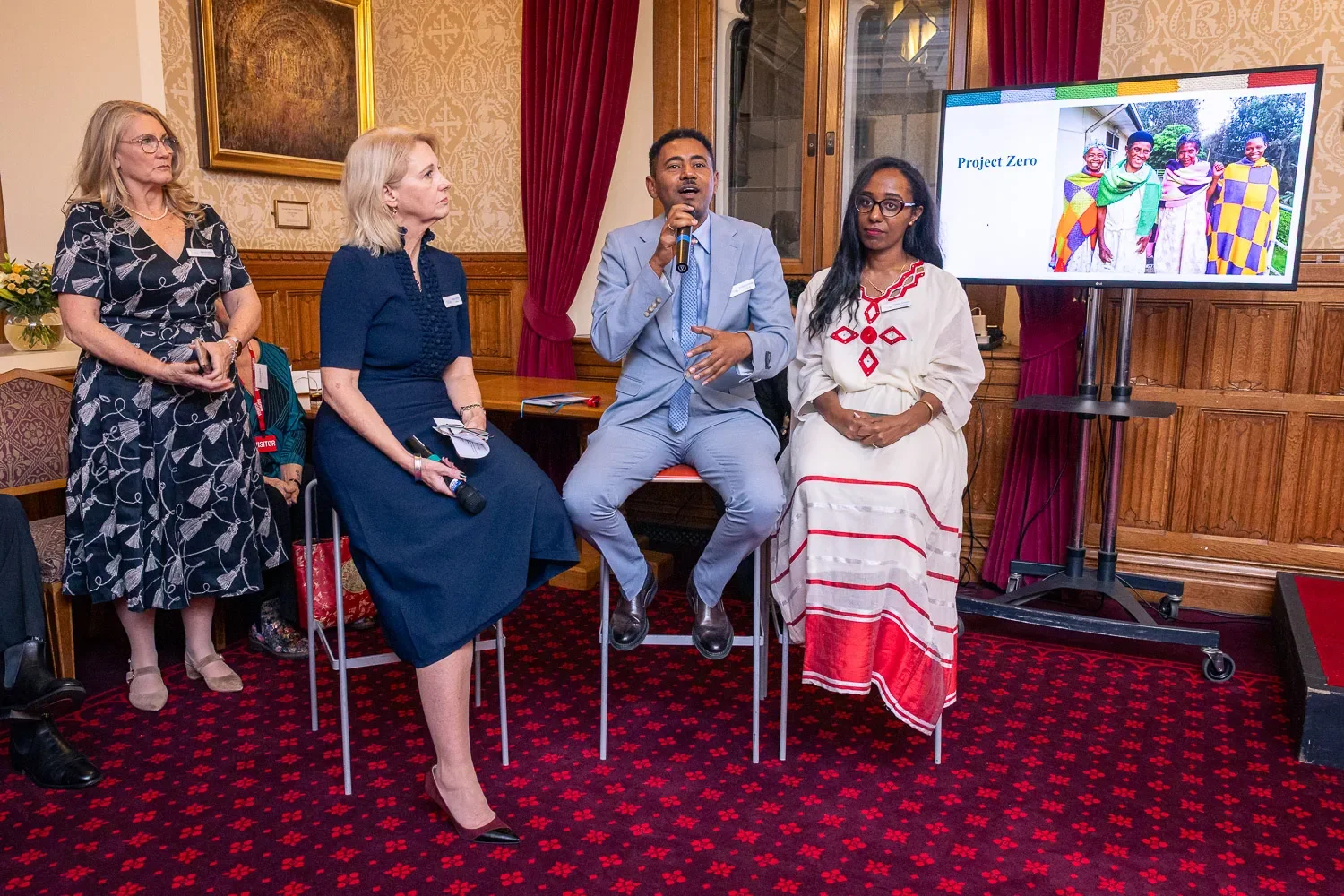
The Q&A, shot from the side to keep the screen in play. From left to right: Karen Foard, Global Head of Fundraising, Marketing and Communications, Catherine Hamlin Fistula Foundation; Alison Jefferis, Trustee Director; Dr Solomon Abebe, General Manager, Hamlin Fistula Ethiopia; and Hanna Tesfaye, Project Zero Program Manager, Hamlin Fistula Ethiopia.
Around that I fitted in everything else on the brief. Posed groups, a few formals, the keynote speeches, a Q&A, and the video messages playing on the big screens. During the speeches, I made sure the CHFI branding was in frame as often as possible. A press picture is far more useful when it tells you who’s speaking and why they’re there.
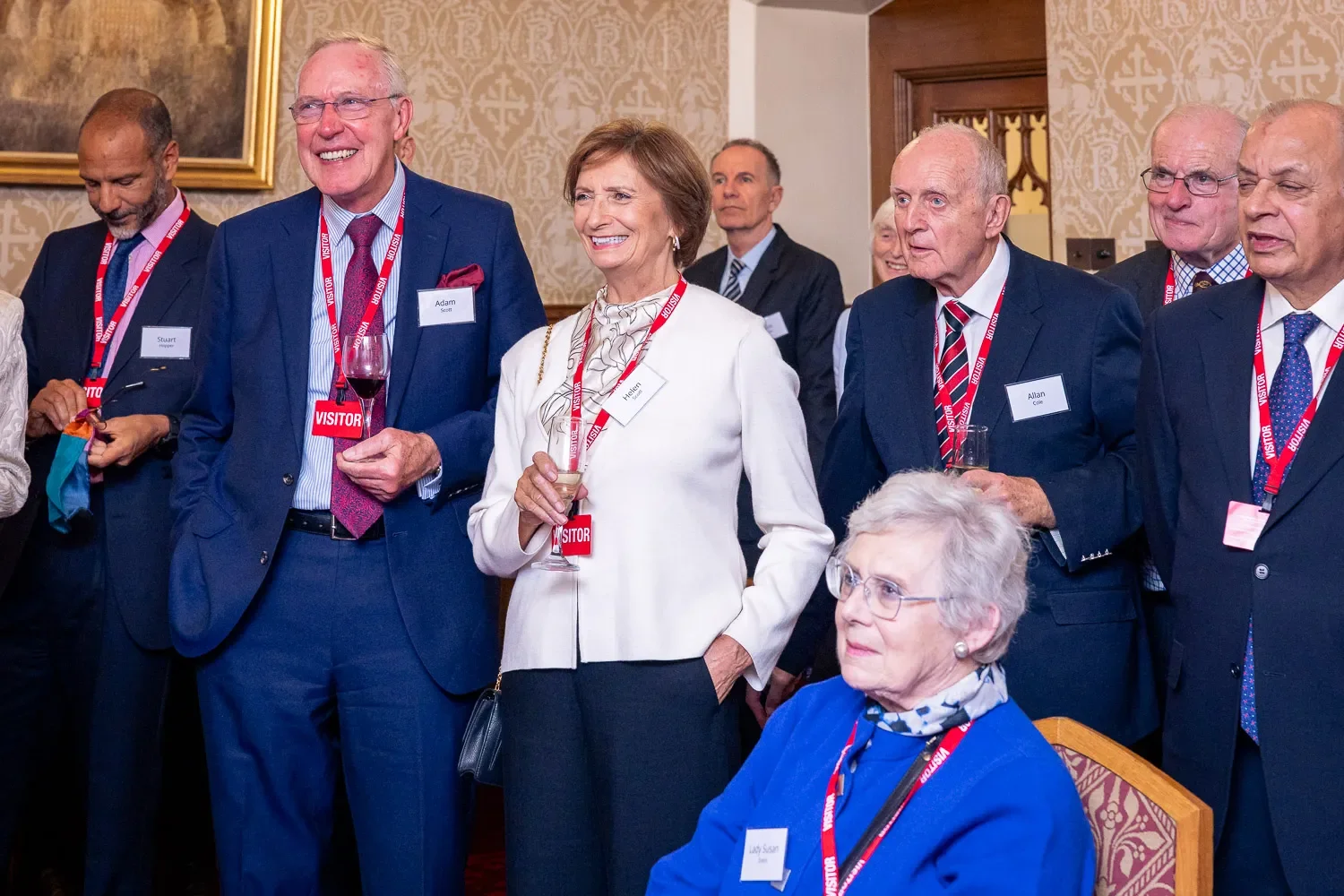
The audience matters as much as the speaker.
I also kept an eye on the audience. The faces listening to a speech often tell the story better than the speaker does.
The aim was variety. CHFI will use these images on their website, on social media and in future campaigns, here and abroad. The more choice they have, the longer the pictures keep working for them.
The night shift
I thanked the hosts and Alison and left at about 8.45 pm, then took the Tube and the Overground home to St Albans. I was through the door by 10.15 pm and went straight to work.
First I downloaded everything, then started culling. Culling just means going through every frame and keeping only the best: sharp focus, good expressions, eyes open, no awkward moments. By 1.15 am I’d started editing, but I was tired, and tired eyes make bad edits. So I stopped and went to bed.
I was back at it by 5.30 am, finishing the edits on the shortlist.
What the client got
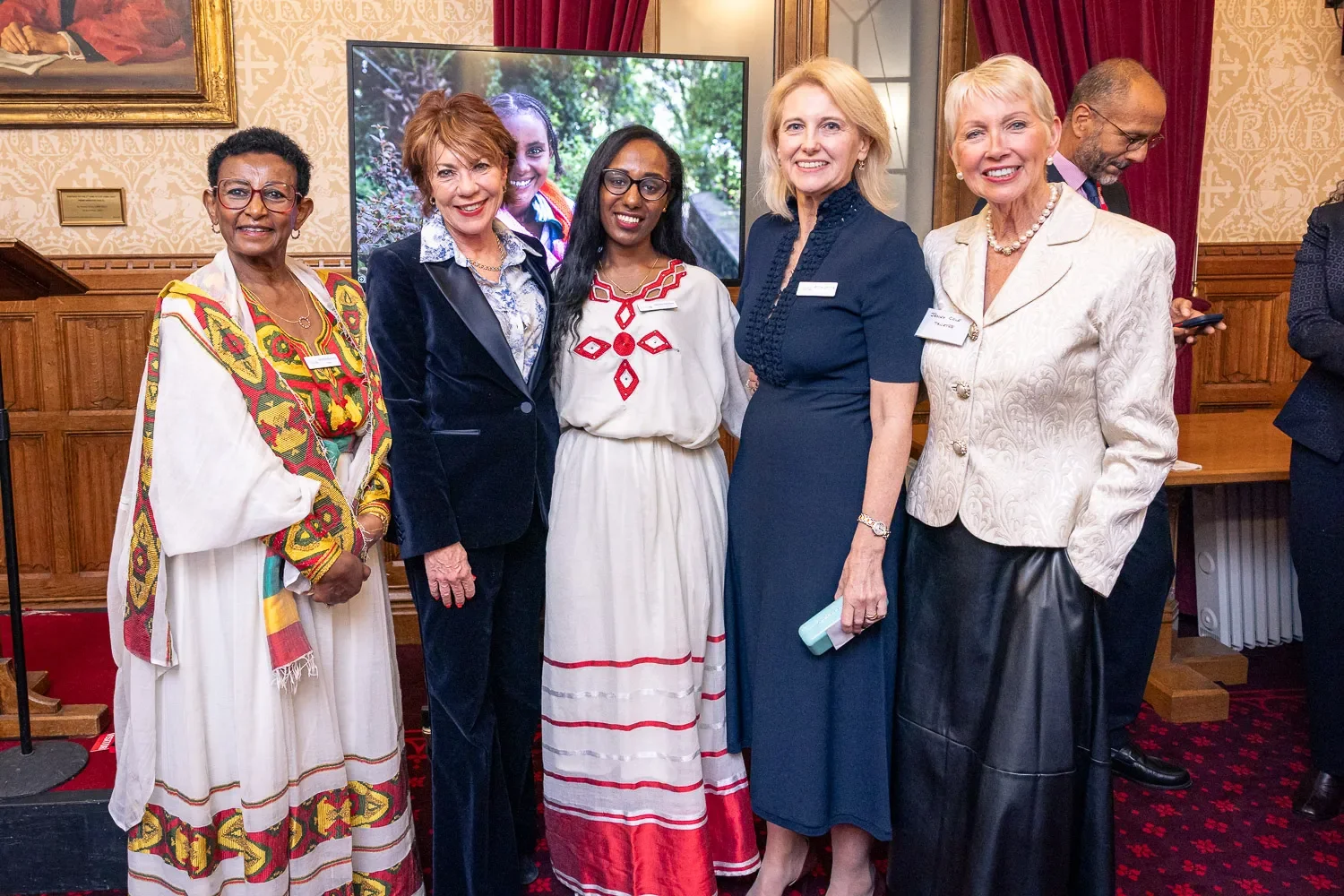
One of the posed groups. Quick, relaxed, done.
Several hundred frames came down to 176 edited, colour-corrected images. The first 20 went to the client by 10 am on Friday, ready for the press announcement of the charity’s launch. The rest followed on Saturday.
The client was delighted, and the images were already going out on social media within hours.
“You’ve provided a great selection, and I’m sure you’ll have seen we’ve already started to post some of them.”
Alison Jefferis, Trustee, Catherine Hamlin Foundation International
Three things made this one work, and they apply to any event:
Arrive early. Especially at a venue you don’t know, and doubly so where there’s security.
Test before the guests arrive. Settings and flash sorted while the room is empty means no fiddling once it’s full.
Deliver a priority set first. Ask what’s needed fast and get that out the door before anything else.
Planning an event of your own?
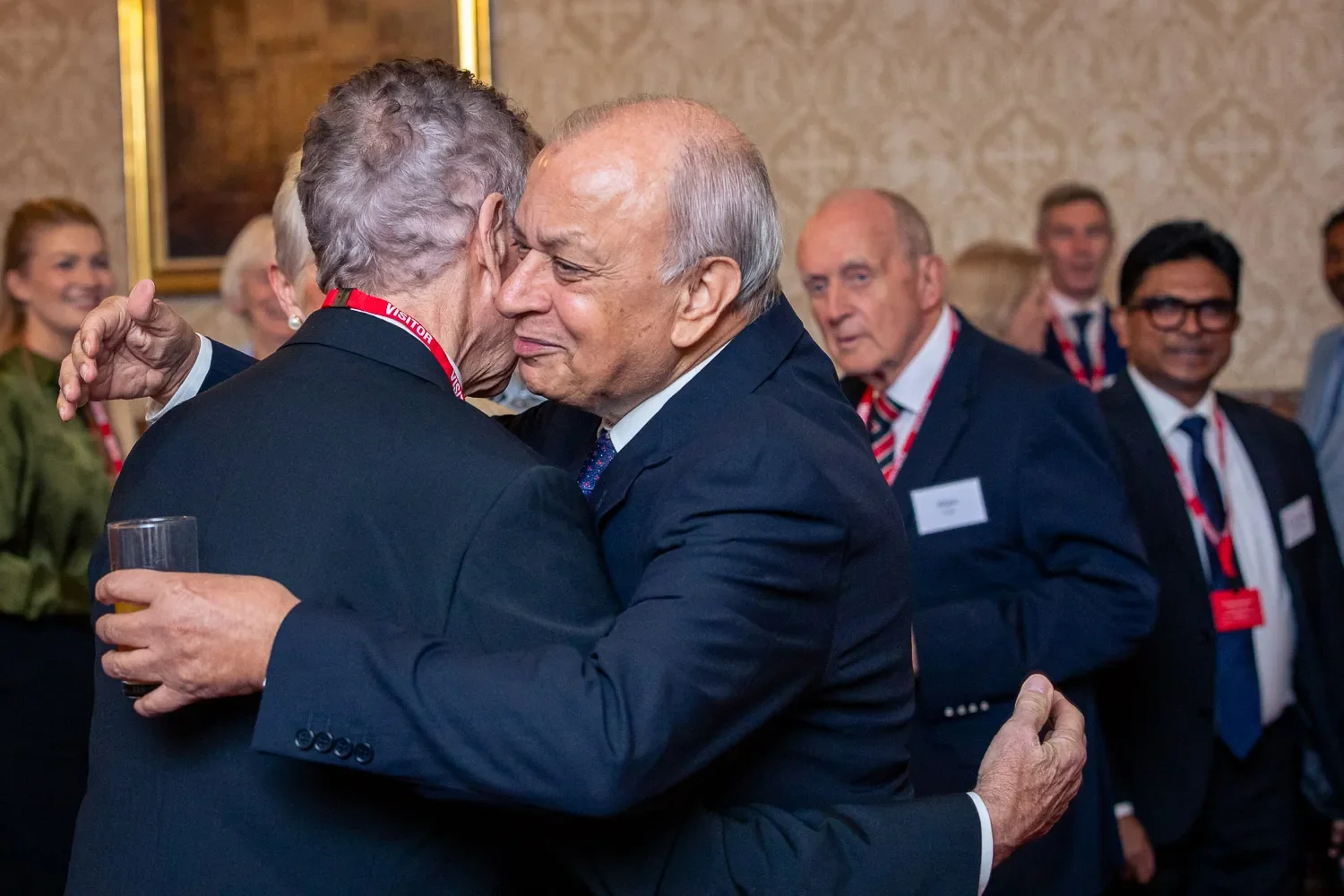
Moments like this happen once. You have to be ready.
Whether it’s a charity launch, an awards night or a team reception, the job is the same: capture the evening as it really felt, without getting in the way of it. You can see more of my work as an event photographer St Albans & Hertfordshire, and I’m always happy to chat through what you’ve got coming up.
Questions people ask me
Do you photograph events in London as well as Hertfordshire?
Yes. I’'m based in St Albans, and London is a quick trip by train. This shoot was in Westminster, and I’ve covered events across London for years.
How quickly can you deliver event photos?
If you need images for a press release, I can deliver a priority set the next morning. Here it was 20 images by 10 am. The full edited set usually follows within a couple of days.
Do you use flash at indoor events?
Usually, but bounced off the ceiling or walls rather than pointed at people. It gives softer, more natural light and keeps attention on the guests, not the camera.
How many photos will I get from a two-hour event?
It depends on the event, but for this two-hour reception I delivered 176 edited images, chosen from several hundred. Every image is checked, edited and colour-corrected by hand.
Based in St Albans, also covering Harpenden, Hemel Hempstead, Watford, Hertford, across Hertfordshire and London.