
She came in a little nervous. She left with the first photos of herself she’s actually loved.
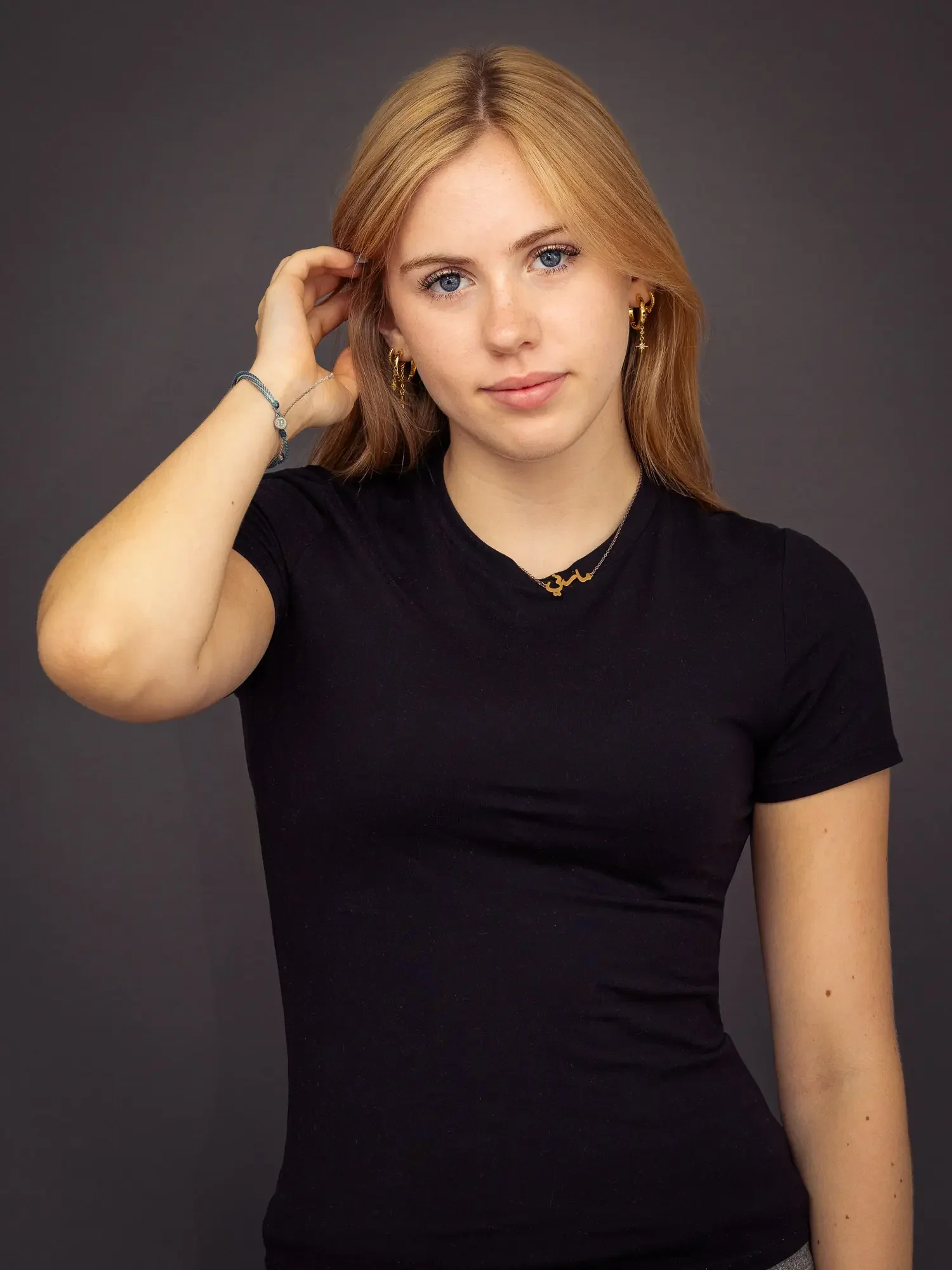
Most of a session looks like this: small resets between the shots that actually get used.
Actor headshots are a strange kind of photo. They’re not really about looking your best, they’re about looking like yourself, caught in a moment that feels true. A friend asked me to photograph her daughter ahead of some upcoming auditions, and it turned into one of my favourite sessions this year. What started as a slightly nervous few minutes in front of a grey backdrop became a set of images that actually captured her, not a stiffened, camera-ready version of her. If you’re a parent, guardian or young performer wondering what a real headshot session looks like, and how to get the most out of one, here’s everything that went into this one.
“Mike was the perfect choice to take headshots for my daughter’s acting portfolio recently. He was extremely flexible with some tight deadlines we gave him and the quality of the images he took really did fit the brief. His calm and professional manner was very reassuring and put our daughter at ease instantly. I wouldn’t hesitate in recommending Mike for his expert services.”
What makes a good actor headshot?
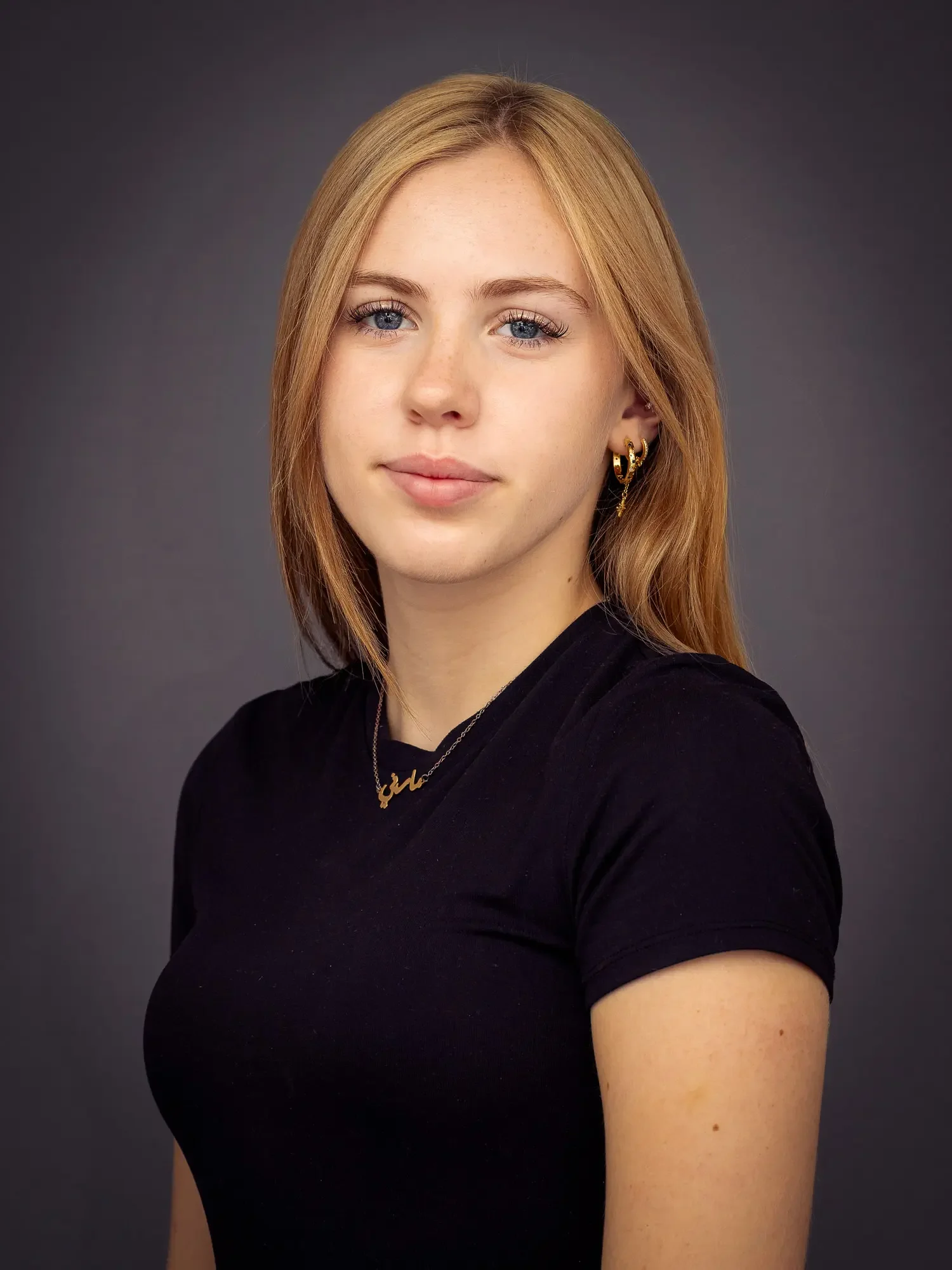
The theatrical look: quiet, direct, built for drama and character casting.
A good actor headshot isn’t the same as a good portrait. Casting directors and agents scroll through hundreds of these in a day, so a headshot has one job: make someone stop scrolling and remember a face. That comes down to three things. The eyes need to be sharp and alive, because that’s where a viewer looks first. The background needs to stay out of the way, so a plain, softly lit backdrop works better than anything busy. And the expression needs to feel honest rather than performed, since casting teams can spot a forced smile from across a room. When all three line up, a headshot stops being a photo and starts being a first impression that actually does its job.
What should a young actor wear for headshots?
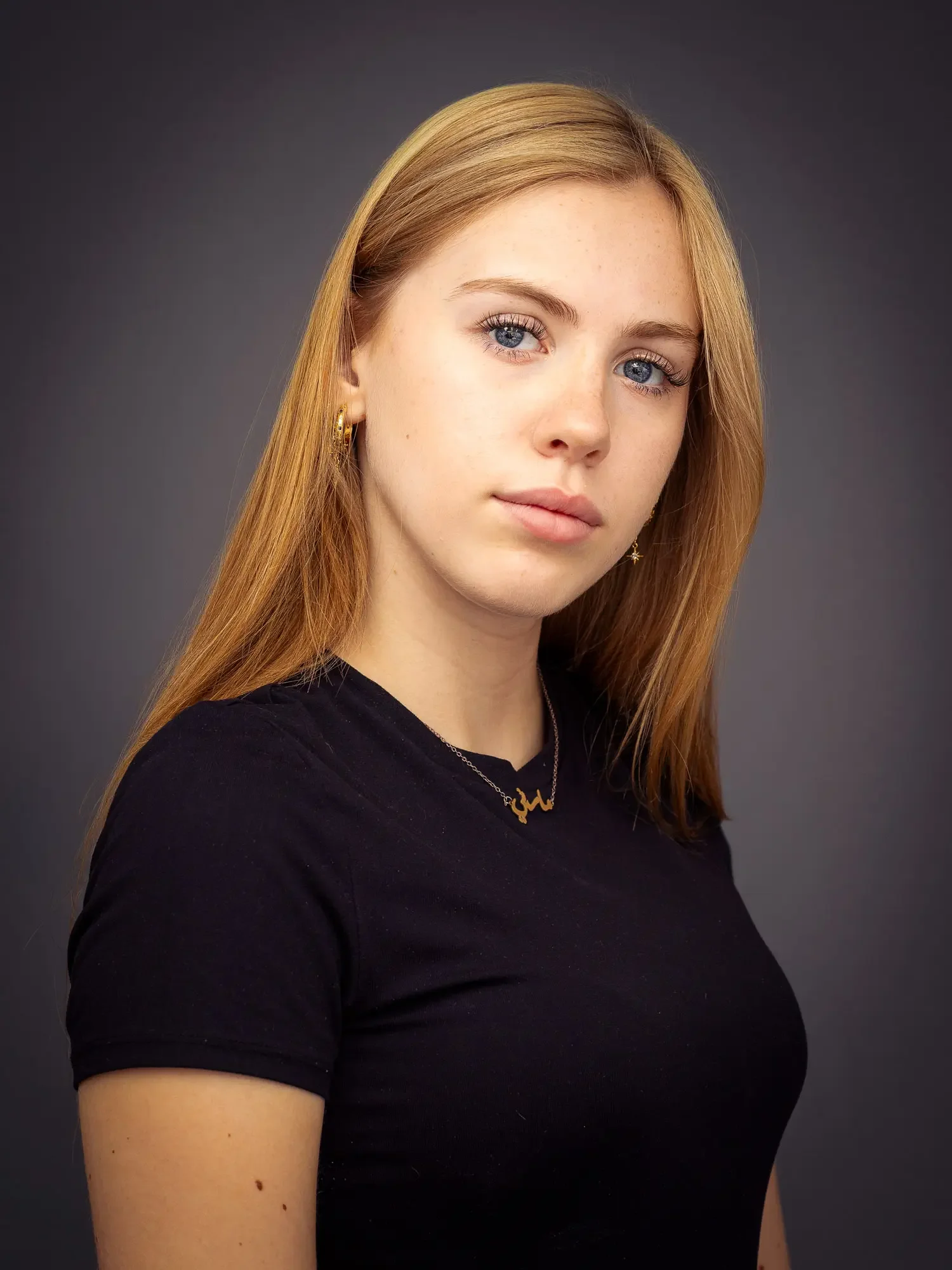
A second angle from the same look, useful for showing range without a full outfit change.
Simple wins every time. Plain, well-fitted tops in a colour that suits the person, rather than the trend, photograph best. In this session we used a couple of solid colours, a dark neutral and a deep red, both close-fitting enough to keep the focus on the face rather than the fabric. Patterns, big logos and busy jewellery all pull attention away from the eyes, which is the opposite of what a headshot is for. It’s worth bringing two or three options on the day so there’s room to pick once you see how the light and background are working, rather than deciding everything beforehand.
How many different looks do you need for a headshot session?
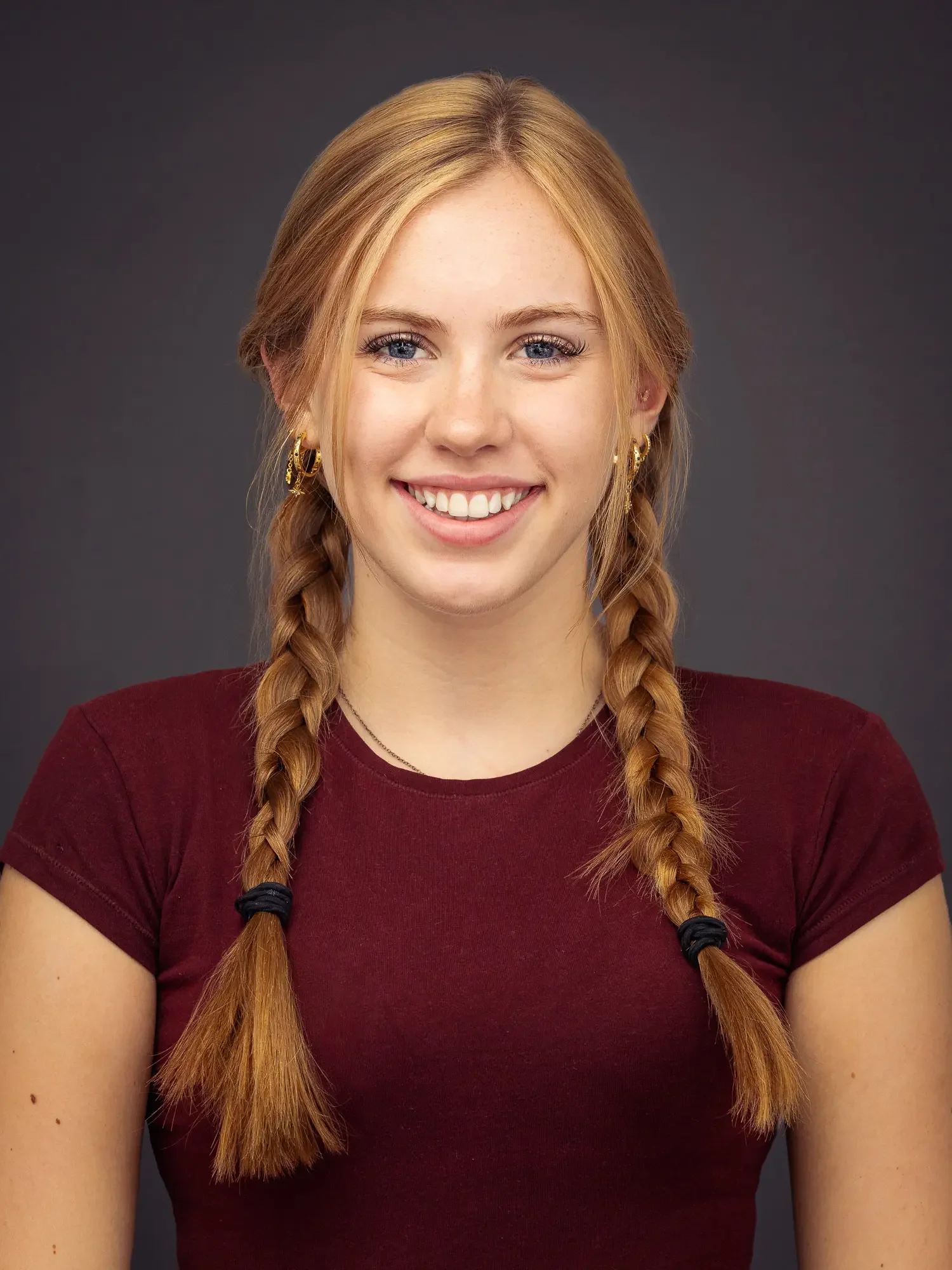
The commercial look: warmer, open, a completely different hairstyle and colour to look genuinely distinct.
Most agents ask for at least two distinct looks, and this session leaned into that. One version kept things simple: hair down, a plain dark top, direct eye contact for a classic theatrical feel. A second version changed the hairstyle and the top colour for something warmer and more commercial. Neither one is “the good photo” on its own, they work as a pair, showing a bit of range without looking like two different people. That range is what actually gets used across different types of auditions, so it’s one of the more practical things to plan before a session rather than something to figure out on the day.
What happens during an actor headshot session?
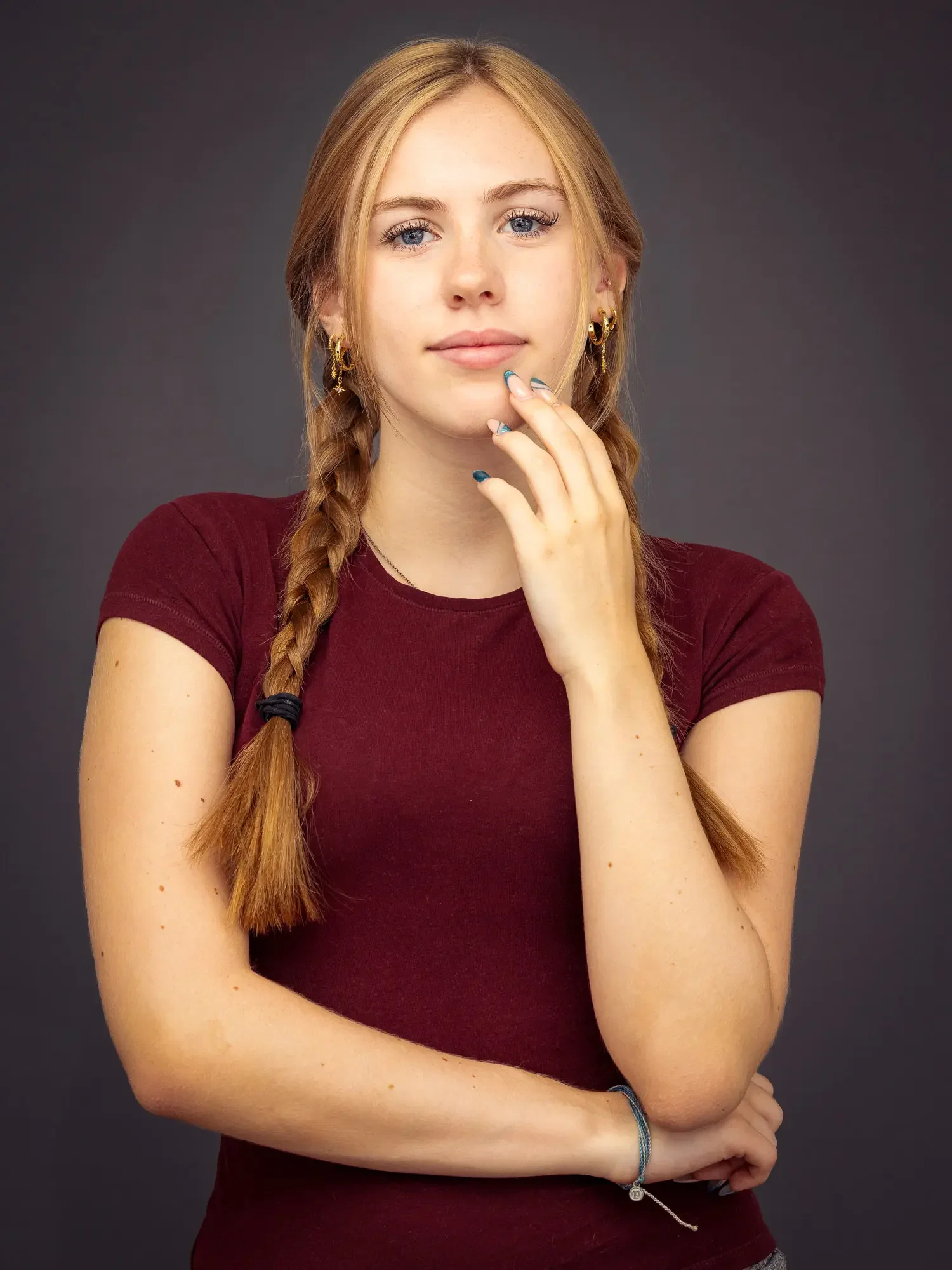
A quieter, more character-driven frame from the second look, good for showing a bit of range within one outfit.
There’s no big secret to it. This particular session ran on location, with a full studio-style backdrop and lighting set-up brought to the family’s home, so there was no travel or unfamiliar studio to settle into first. We started with a few relaxed shots to settle in, nothing formal, mostly just to get used to the camera being there. From there we worked through angles gradually: straight on, a slight turn, a full profile, checking each one on screen so there was no guessing about how something looked. The best images from this session weren’t the posed ones, they were the moments in between, a laugh, a hand pushing hair back, a genuine reaction rather than a held expression. That’s usually where the most useful shot comes from, so leaving room for those moments matters more than getting every formal pose textbook perfect.
“His calm, professional manner immediately put our daughter at ease, and she quickly felt comfortable and confident taking direction from him. Throughout the shoot, Mike regularly stopped to review the photos with her and with us, so we could see what was working and make small tweaks as we went along.”
What’s the difference between a theatrical headshot and a commercial headshot?
A theatrical headshot is quieter: closed mouth, direct gaze, a bit of intensity, built for drama and character work. A commercial headshot is warmer, an open, natural smile, built for the kind of role where approachability matters more than intensity. Both need to feel like the same person, just on two different days. In this set, the direct, closed-mouth shots against the plain backdrop covered the theatrical side, while a genuine, unforced smile covered the commercial side. Agents and casting directors use both, so having one of each from a single session is far more useful than five variations of only one mood, which is also why corporate and LinkedIn headshots follow a similar principle of picking a look to match the room you’re walking into.
How are actor headshots edited?
Editing an actor headshot is mostly about restraint. The goal is a photo that still looks like the person walking into the room, not a smoothed-over version of them. That means fixing anything temporary, a stray hair, a bit of shine, while leaving skin texture, freckles and everything else that makes a face recognisable exactly where it is. Colour stays close to true to life rather than pushed warm or stylised, and the sharpest point in the whole image is always the eyes. A light, natural edit like this is what makes a headshot hold up next to a real audition, where the person needs to look exactly like their photo.
“The finished photos were first class, exactly what we were hoping for, and he turned them around really quickly. Overall, a first-rate experience. Really pleased we chose Mike and would happily recommend him.”
If you’re thinking about booking a session
If you’re weighing up headshots for yourself or for a young performer in the family, I’d enjoy hearing about it. Feel free to get in touch and we can talk through what a session with me would look like, whether that’s one look or several, and whether that happens at your place or mine.
A few questions people usually ask
How much do actor headshots cost?
Pricing depends on how many looks and final retouched images are included, so the quickest way to get an accurate number is to get in touch with a quick outline of what's needed.
How long does a headshot session take?
Most headshot sessions run for around 45 minutes to an hour, enough time to work through two or three looks without anyone feeling rushed.
Do you need hair and makeup for actor headshots?
It helps, but it isn’t essential. Clean, natural styling and minimal makeup that looks like an ordinary day tends to work best for actor headshots, since casting teams want to see the real face rather than a done-up version of it. Bringing a hairbrush and touching up between looks is usually enough.
How soon will you get the final images?
Turnaround depends on the size of the shoot, but it’s normally quick, this family had their final images back in short order, well ahead of any audition deadlines.
Can these headshots be used for Spotlight and casting profiles?
Yes. A well-lit, sharp, honest headshot on a plain background is exactly what casting platforms like Spotlight ask for, so images from a session like this one drop straight into a casting profile without needing to be reshot or reformatted.