
Architectural photography London – Look up London
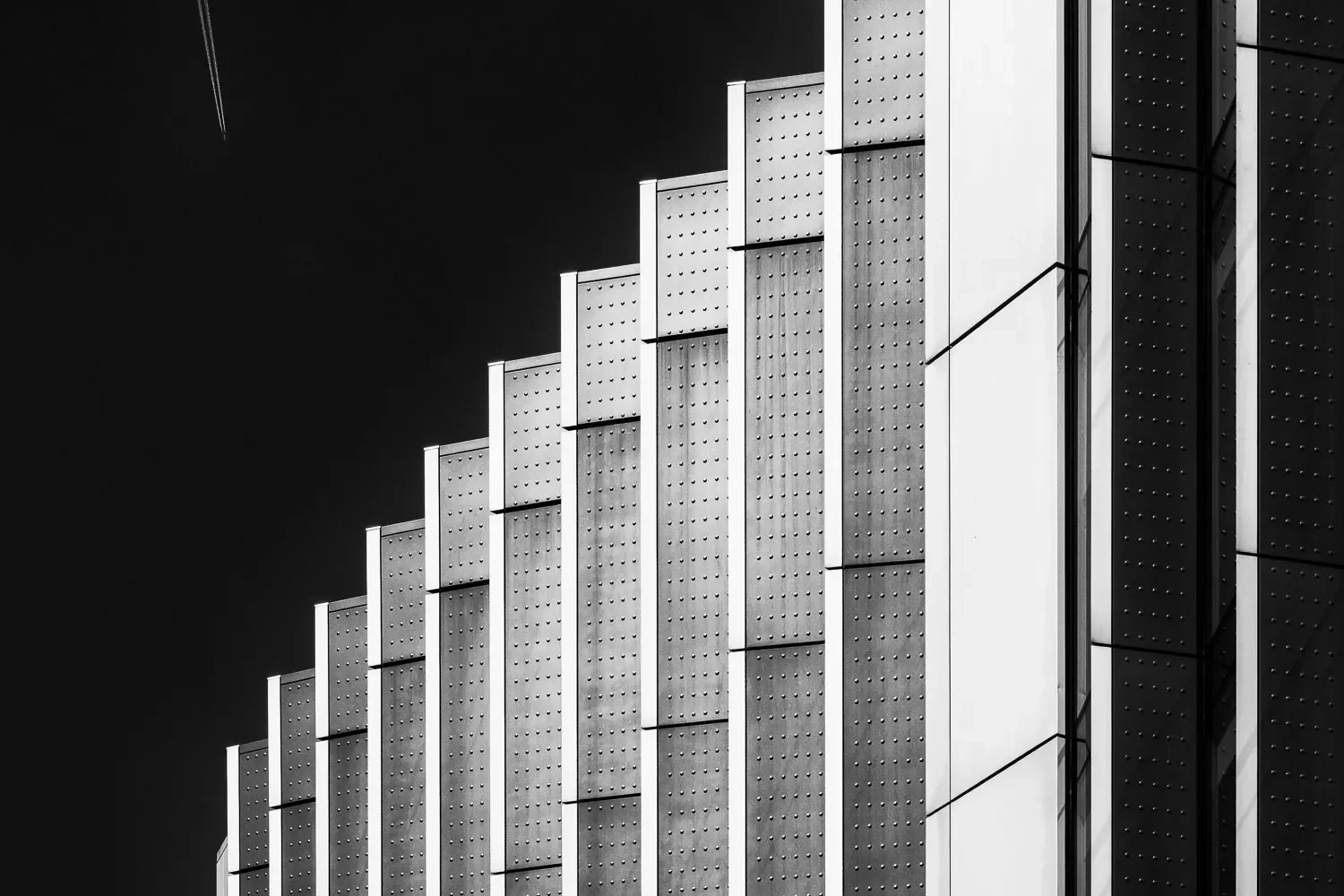
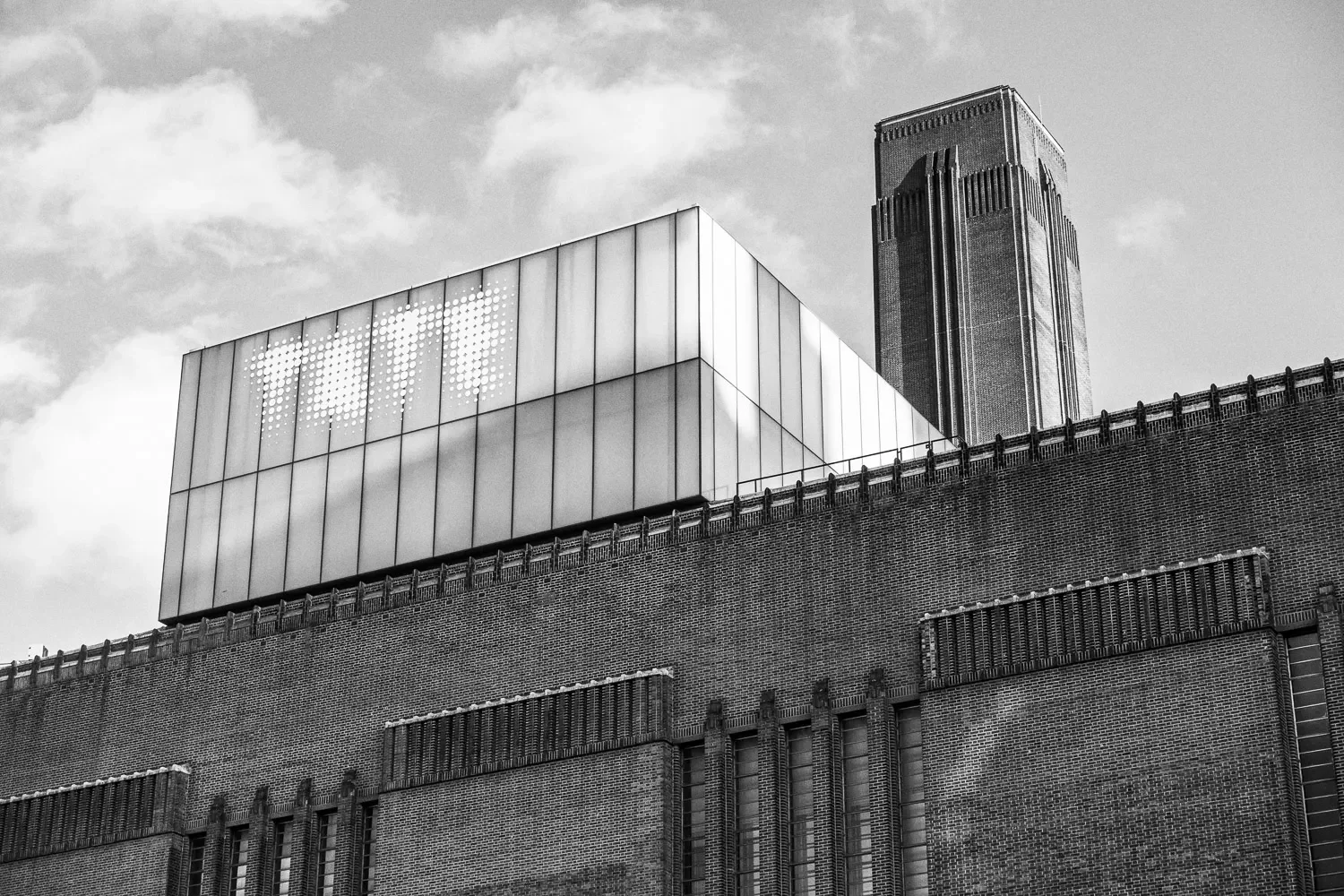
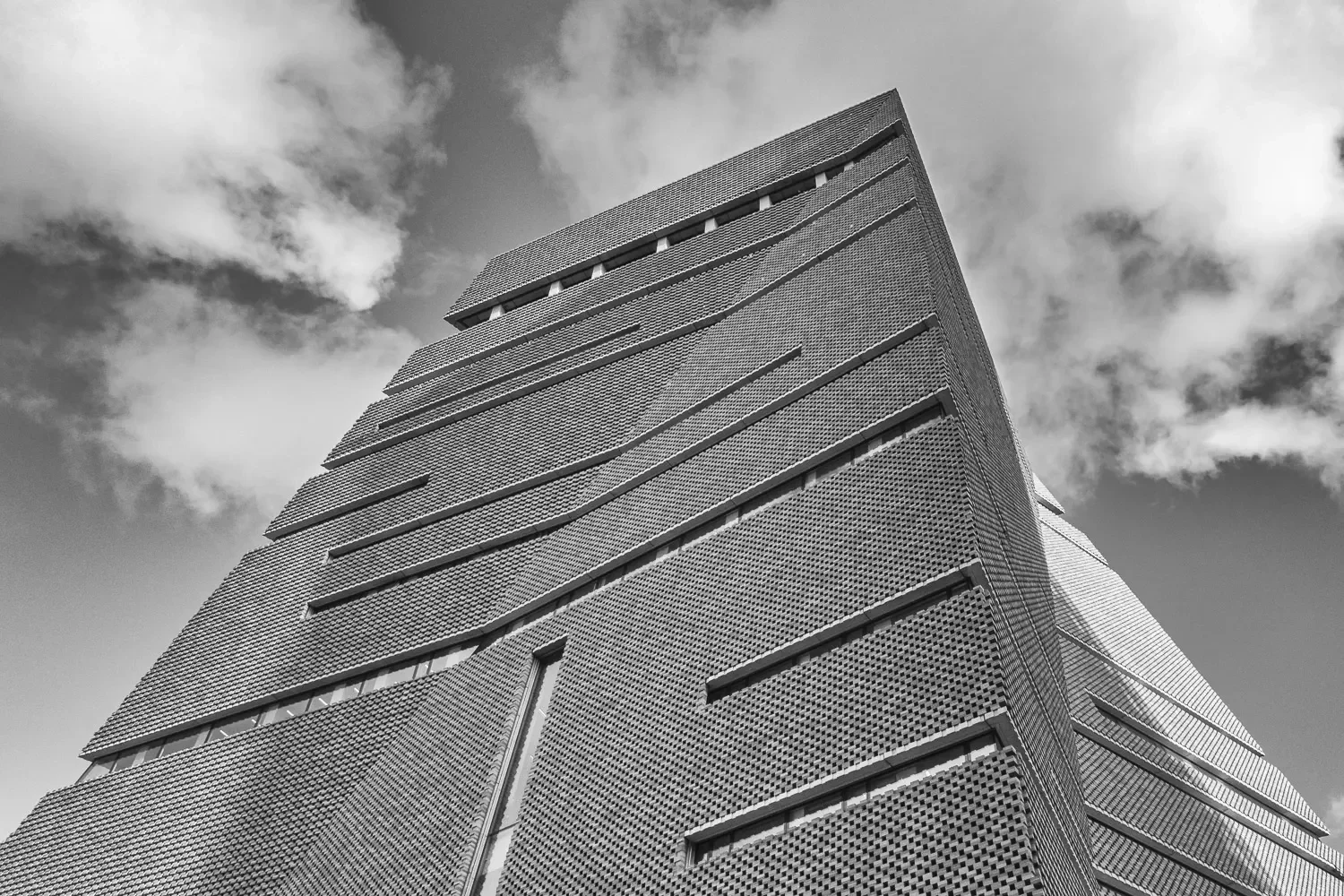
Step by step by step. The repeating rhythm of these perforated panels is the kind of detail most people walk past without a second glance.
A black and white architectural photography study across the City, South Bank and King's Cross
London is a city most people experience at eye level.
Commuters move forward. Tourists scan façades. Shoppers look into windows. Phones pull attention downwards. The rhythm is horizontal.
Look Up London began with a simple shift. I'm based in St Albans, Hertfordshire, and I make regular trips into the city — usually with a camera. One morning I stopped going from A to B as quickly as possible, stopped looking straight ahead, and started looking up.
What I found was another world.
A city above the street
Most of this series was photographed in and around the City of London, along the River Thames, through the South Bank and into King’s Cross. The buildings range from Wren churches and Victorian commercial masonry to Brutalist concrete, Art Deco stonework, and the hard geometry of contemporary glass towers like 20 Fenchurch Street, the Lloyd's building, and the Scalpel. Each location presents a distinct architectural language. Each rewards a different kind of looking.
London’s architecture is often judged from the pavement. Grand entrances. Imposing façades. Heritage plaques. Glass curtain walls reflecting traffic.
But when you tilt your head back, the narrative changes.
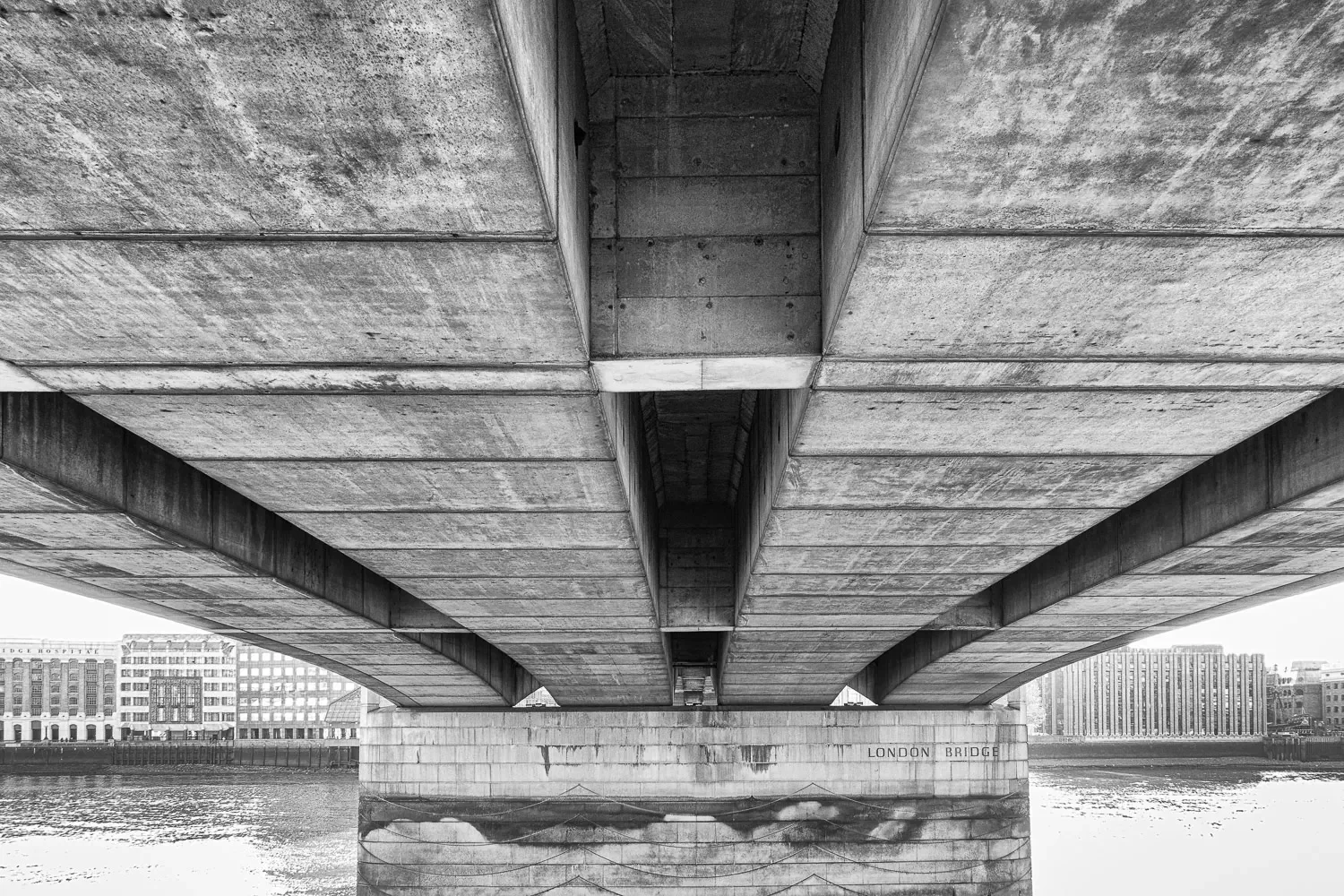
Cornices cast sharp shadows across brickwork. Victorian stonework meets contemporary steel. Reflections fracture the sky into geometry. Unexpected lines converge from unusual angles. The Tate Modern’s Blavatnik Building becomes a study in brick and volume. London Bridge's underside reveals a world of rivets and shadows most people walk straight past.
The street becomes secondary. The skyline becomes the subject.
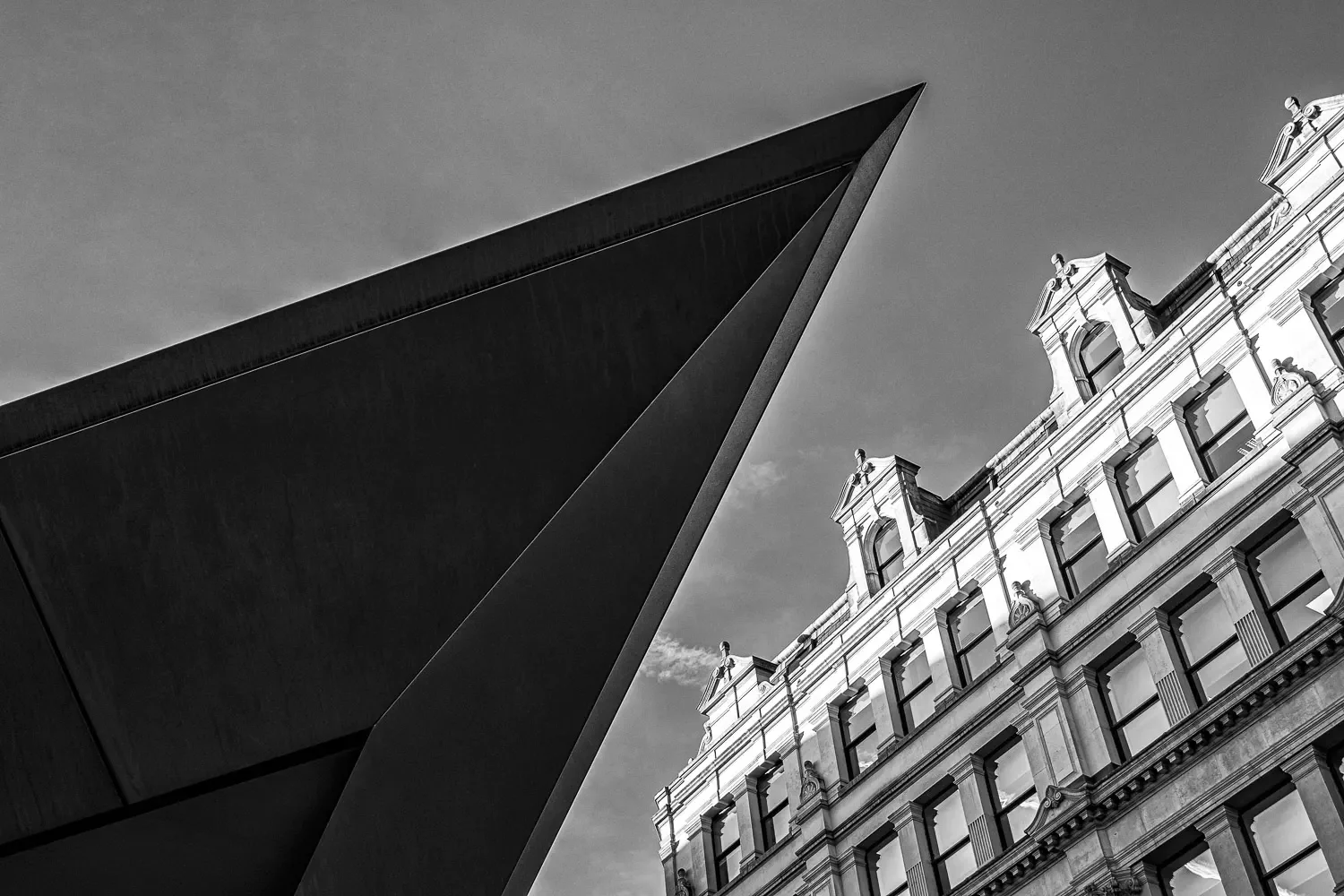
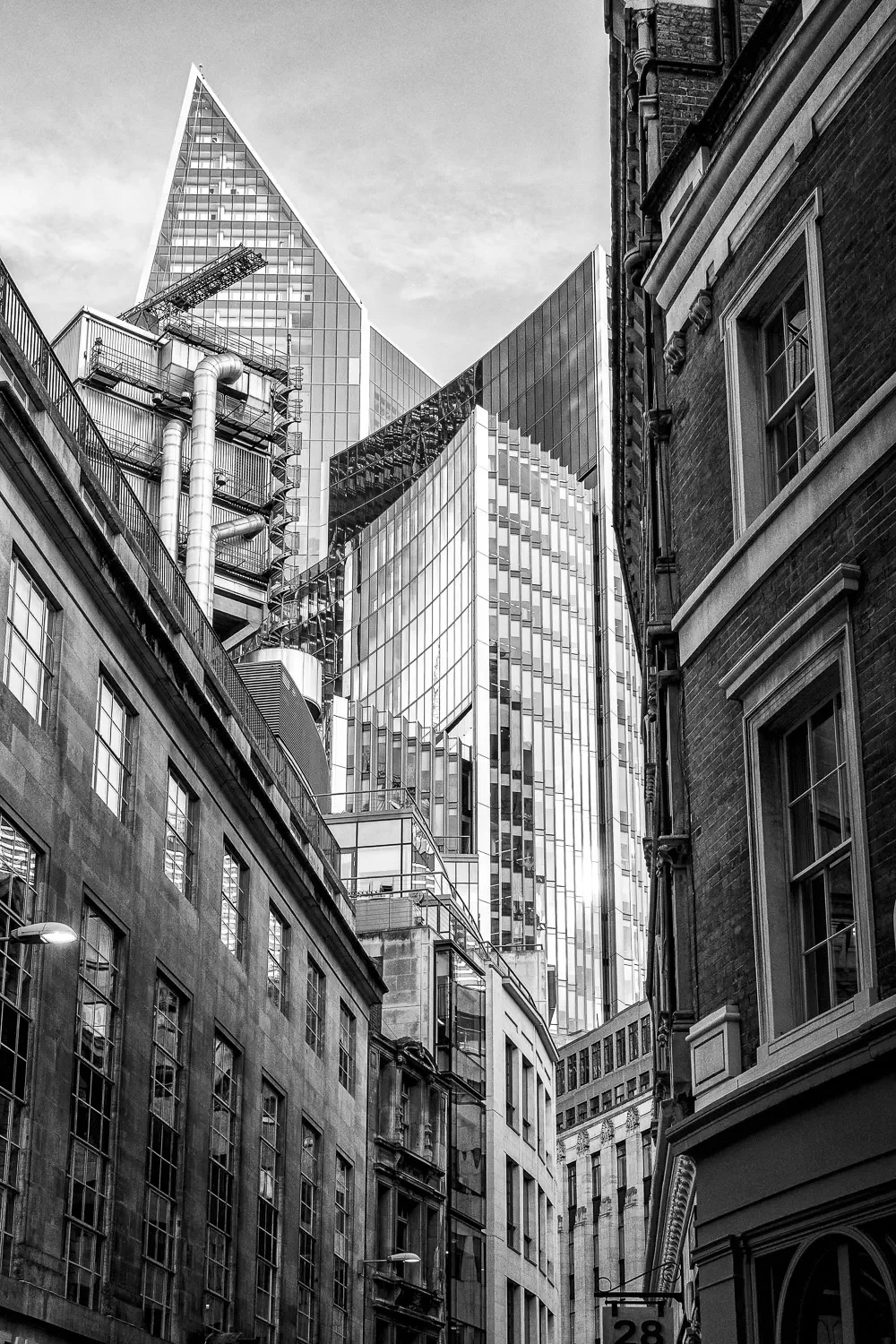
Two buildings, two centuries, one frame. A dark steel blade slices across an ornate Victorian facade – the City of London in a single shot.
Historic and contemporary architecture in the City of London
One of the most compelling aspects of photographing architecture in London is the tension between eras.
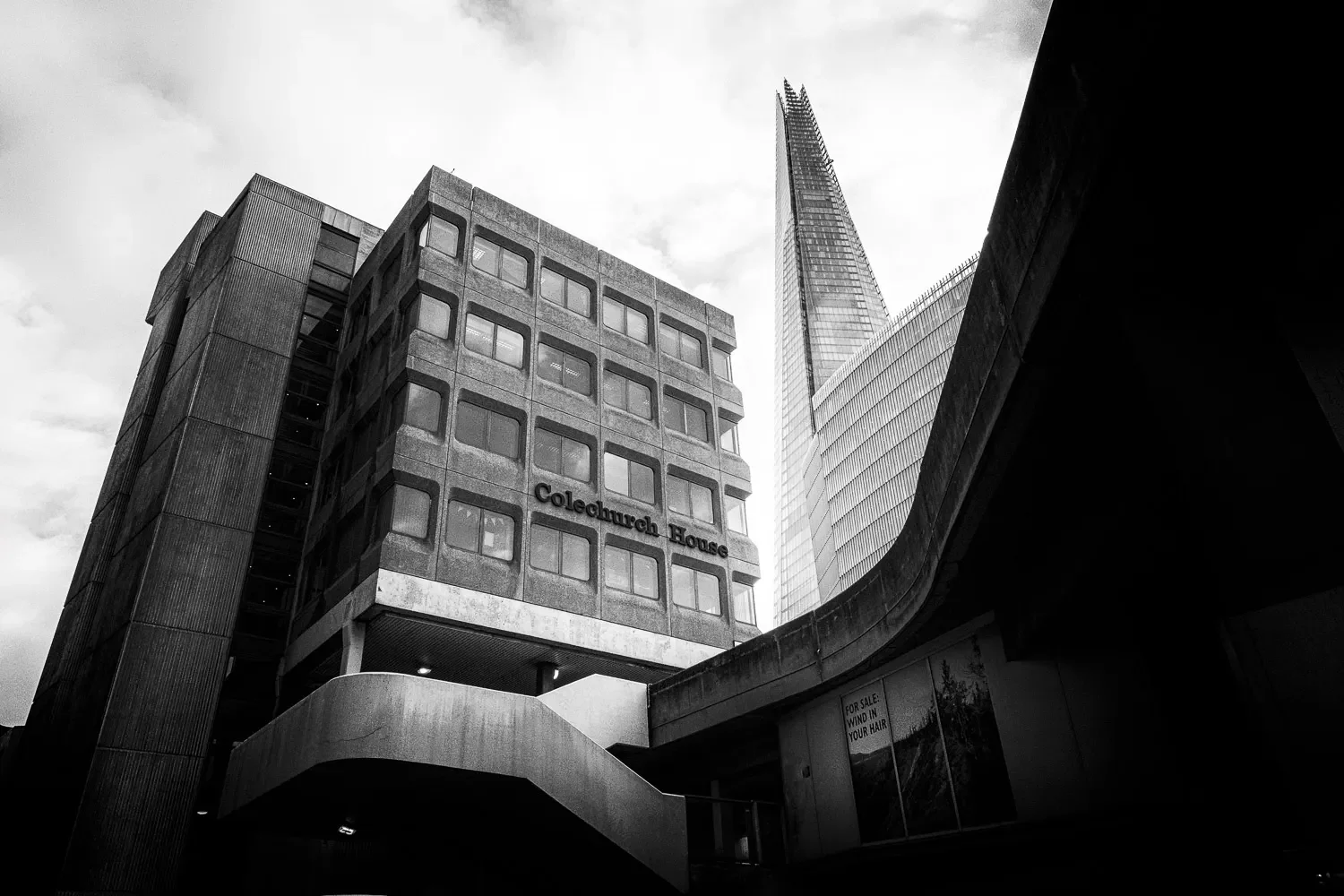
A fragment of ornate masonry can sit inches away from a sheet of mirrored glass. Brutalist concrete frames fragments of sky. Art Deco detailing contrasts with minimalist steel grids.
By isolating these elements from their street-level context, buildings stop being offices or landmarks. They become studies in light, form, repetition and contrast.
The city feels less functional and more sculptural.
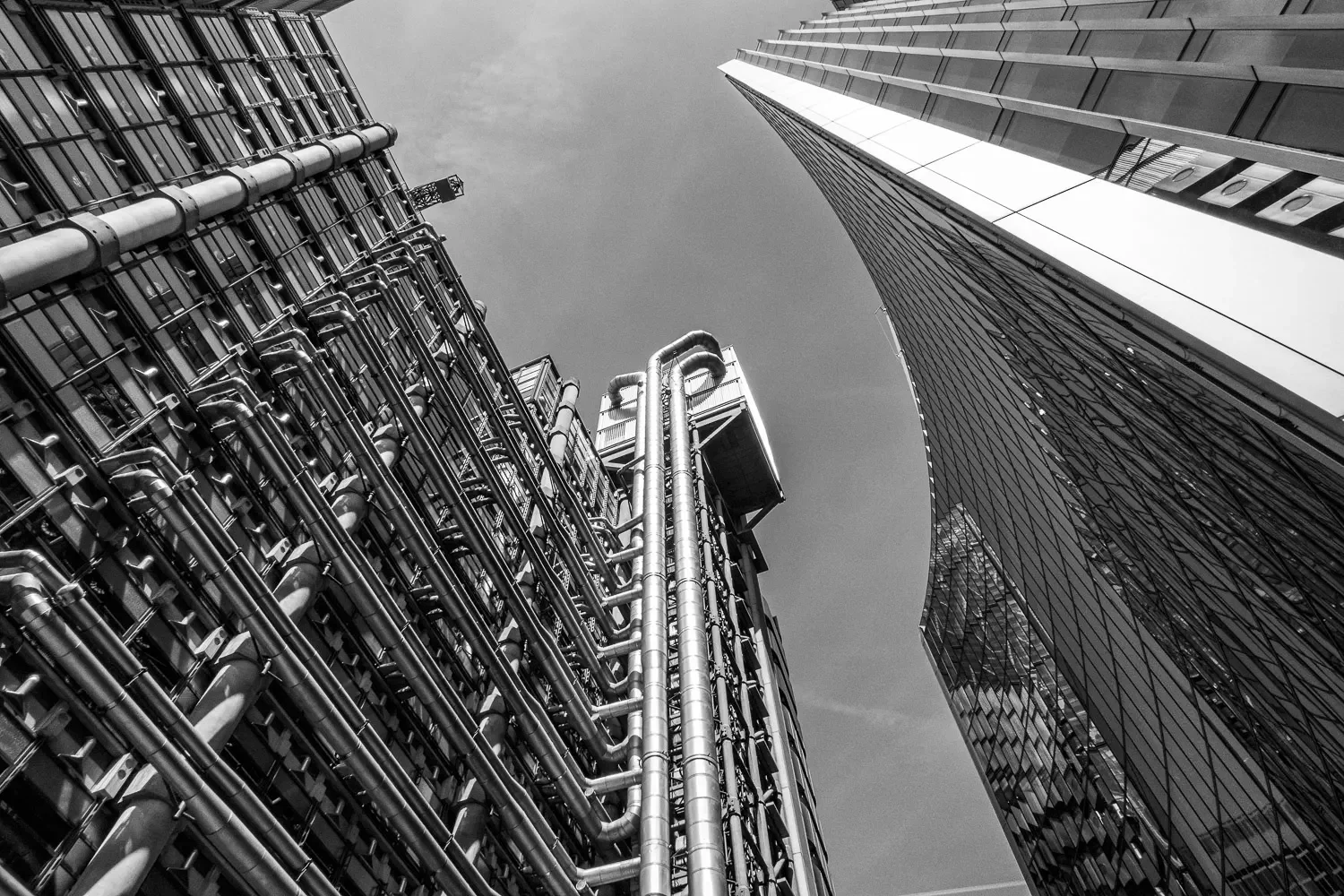
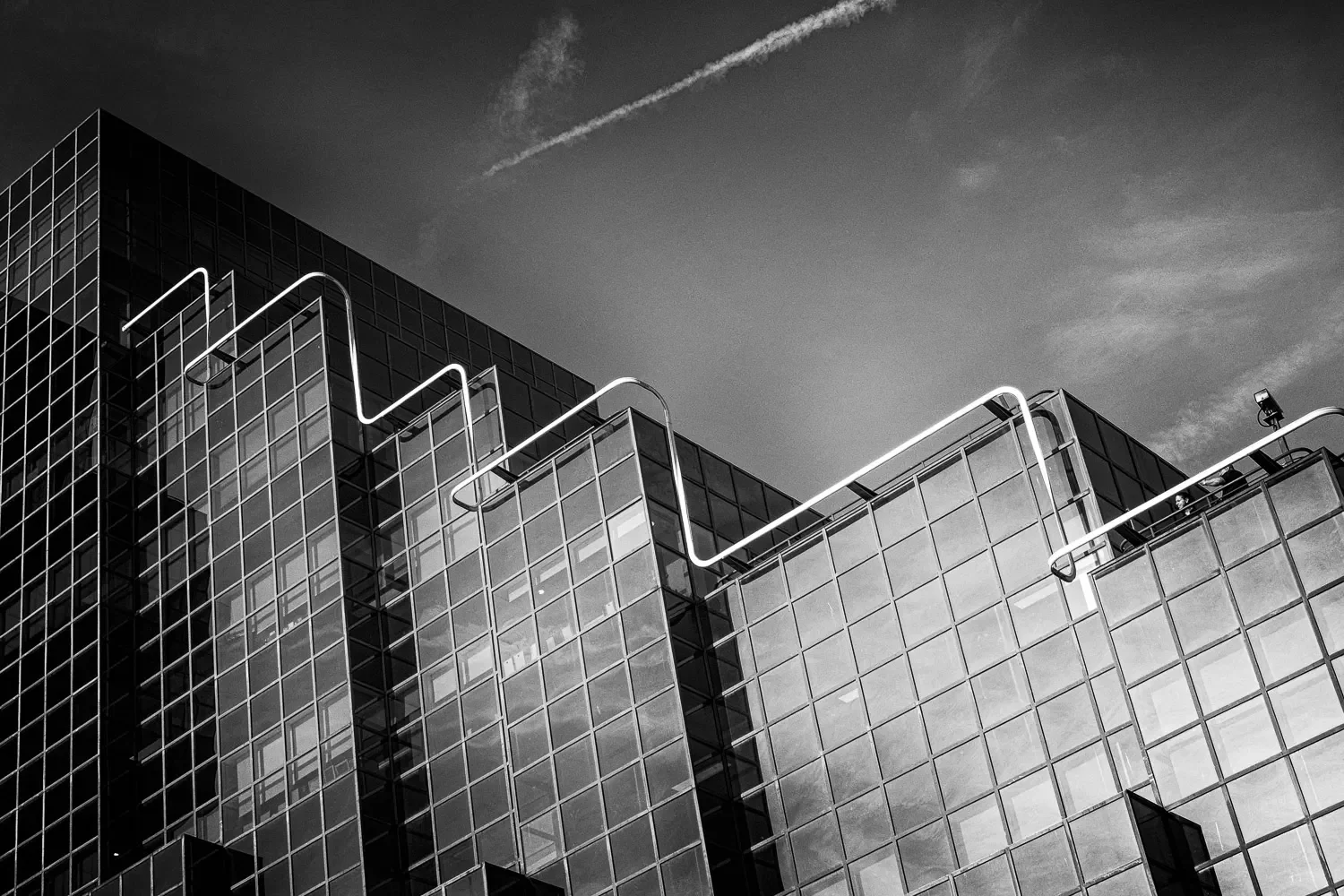
Standing between the Lloyd's building and its neighbour and looking straight up. All pipes, glass, and sky.
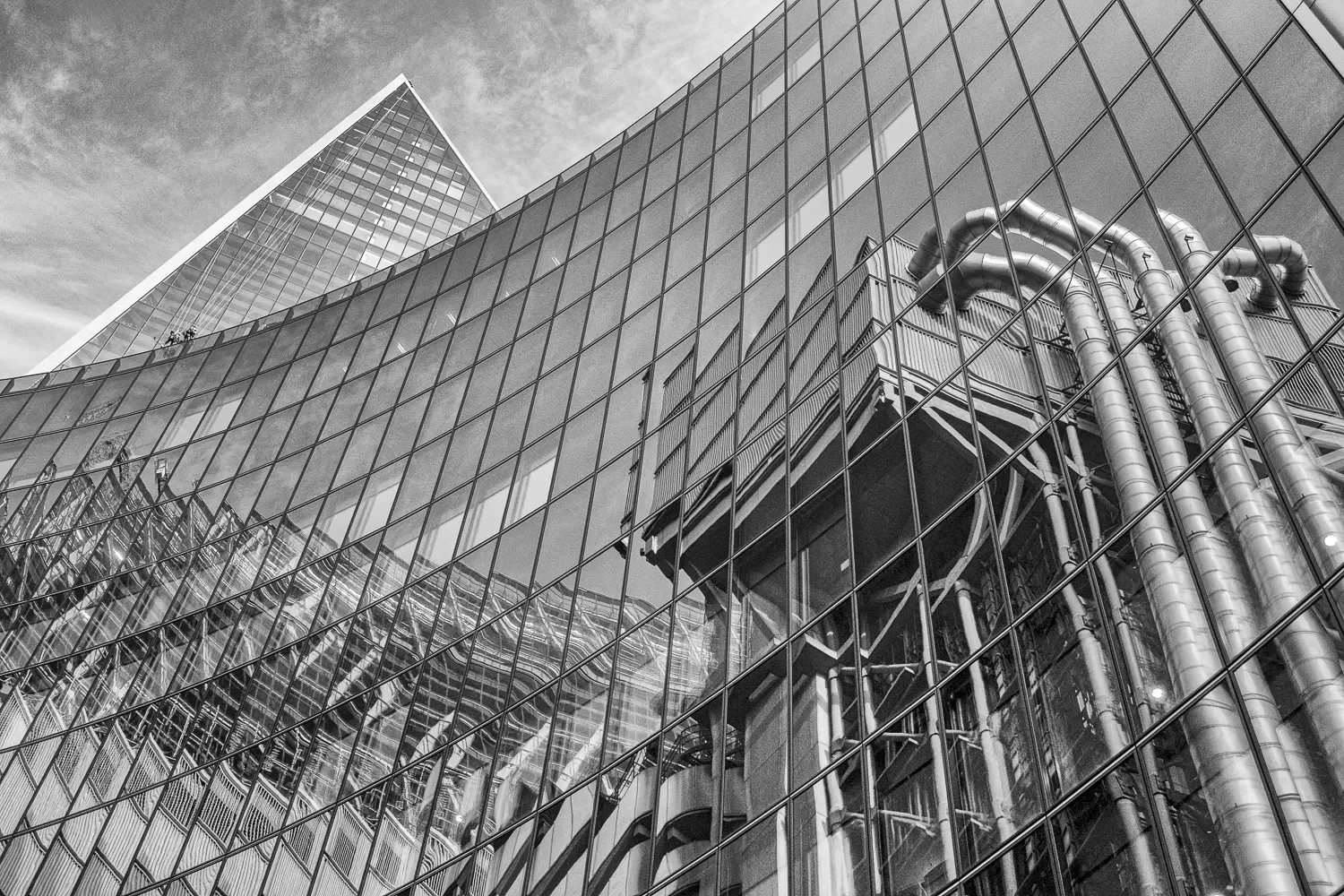
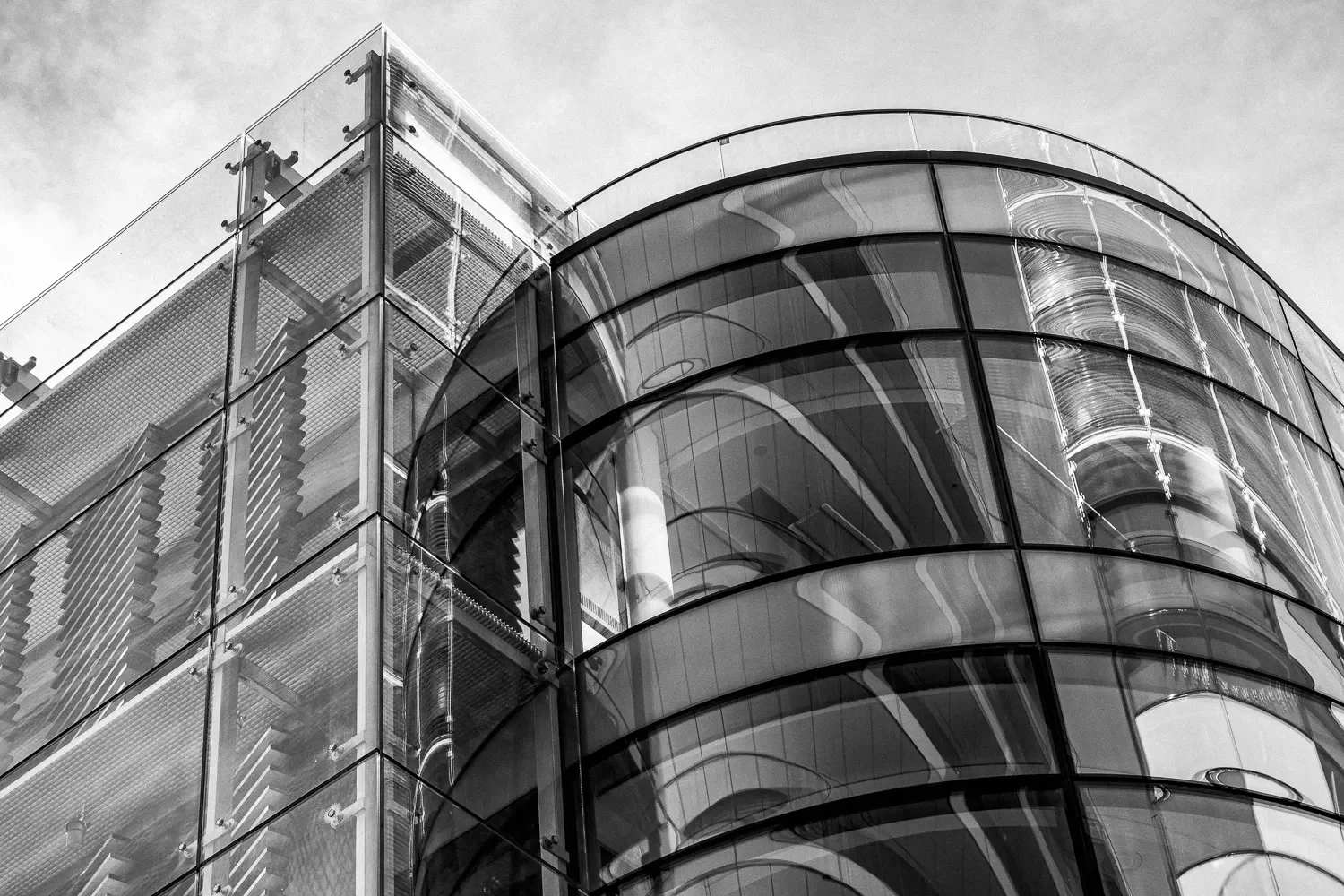
The Lloyd's building reflected back at itself through the curved glass of the tower next door. Reality and reflection, impossible to separate.
How I approach architectural photography in London
This project imposed a discipline.
Rather than documenting entire buildings, I focused on unusual upward perspectives, leading lines that draw the eye vertically, intersections of shadow and light, repetition and structural rhythm, reflections in glass and steel, and architectural details that most people miss.
Shooting this way slows everything down. You cannot rush a photograph when you are studying perspective and structure. You wait for light to define form. You adjust position by inches to control distortion. You remain still while the city moves around you.
Position matters more than equipment. A few centimetres can be the difference between a vertical that's clean and one that's barely visible. I'm working with a full-frame mirrorless camera and a combination of wide and standard primes, no tilt-shift on this project. Distortion is managed through precise positioning and post-processing, not corrected away entirely. A small amount of converging verticals can reinforce the sense of looking up.
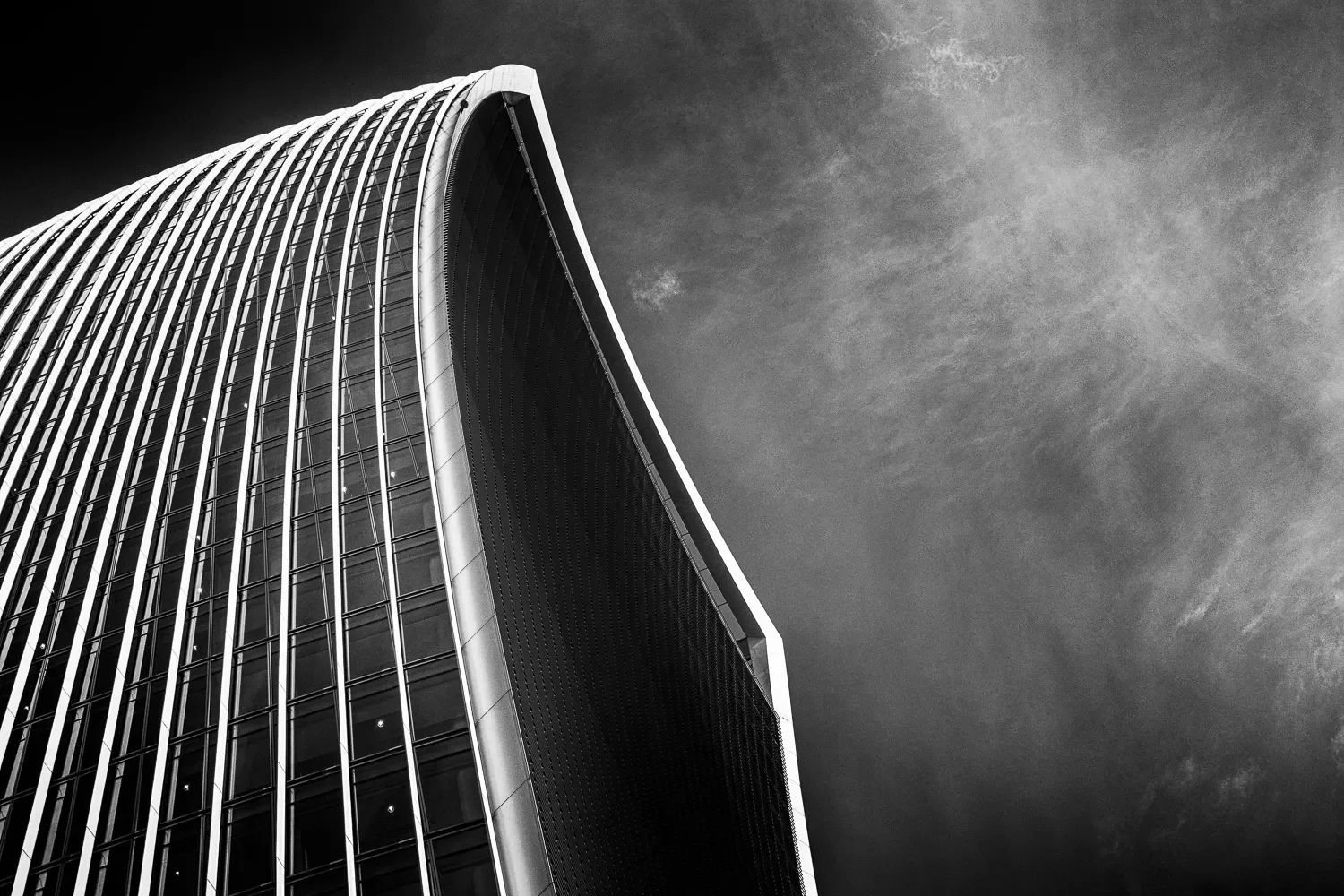
Twenty Fenchurch Street. That curve against that sky. Sometimes the weather does half the work for you.
A city above the street
Most of this series was photographed in and around the City of London, along the River Thames, through the South Bank and into King's Cross. The buildings range from Wren churches and Victorian commercial masonry to Brutalist concrete, Art Deco stonework, and the hard geometry of contemporary glass towers like 20 Fenchurch Street, the Lloyd's building, and the Scalpel. Each location presents a distinct architectural language. Each rewards a different kind of looking.
London's architecture is often judged from the pavement. Grand entrances. Imposing façades. Heritage plaques. Glass curtain walls reflecting traffic.
But when you tilt your head back, the narrative changes.
Cornices cast sharp shadows across brickwork. Victorian stonework meets contemporary steel. Reflections fracture the sky into geometry. Unexpected lines converge from unusual angles. The Tate Modern's Blavatnik Building becomes a study in brick and volume. London Bridge's underside reveals a world of rivets and shadows most people walk straight past.
The street becomes secondary. The skyline becomes the subject.
Why black and white architectural photography works
Every image in this series is presented in black and white.
London is visually busy. Colour competes for attention. Red buses, signage, reflections and passing traffic can distract from the architecture itself.
Removing colour strips the image back to structure.
Black and white emphasises geometry, contrast and material texture. It strengthens shadow lines and sharpens compositional intent. Glass, steel, stone and concrete are defined by light rather than hue. The curved glass facade of 20 Fenchurch Street reads differently without the sky's colour. The Lloyd’s building's exposed pipes and steel become more graphic, more industrial.
There’s also a levelling effect. A Georgian spire and a glass curtain wall from the 1980s lose their era when colour goes. What remains is form, proportion, and the quality of light.
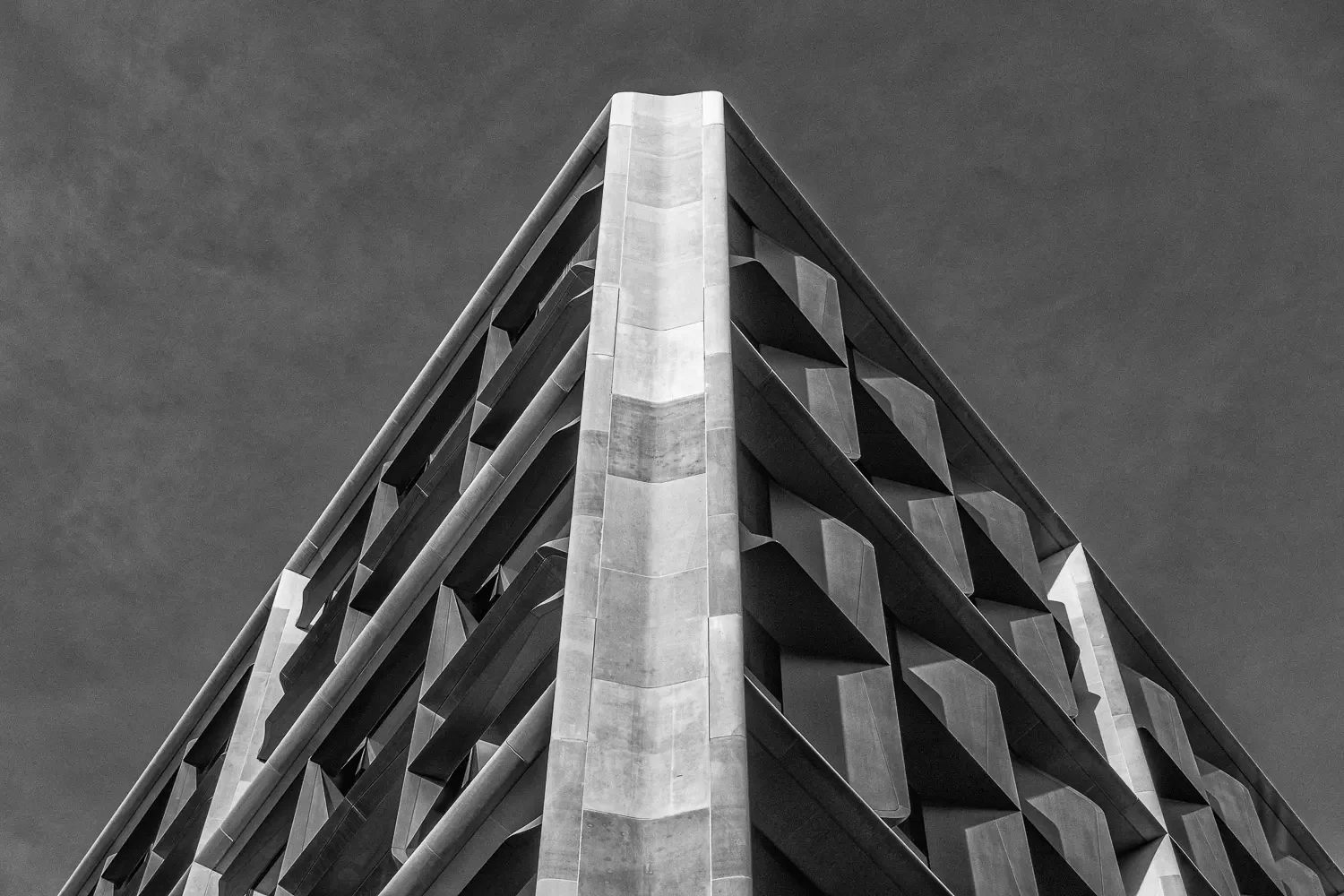
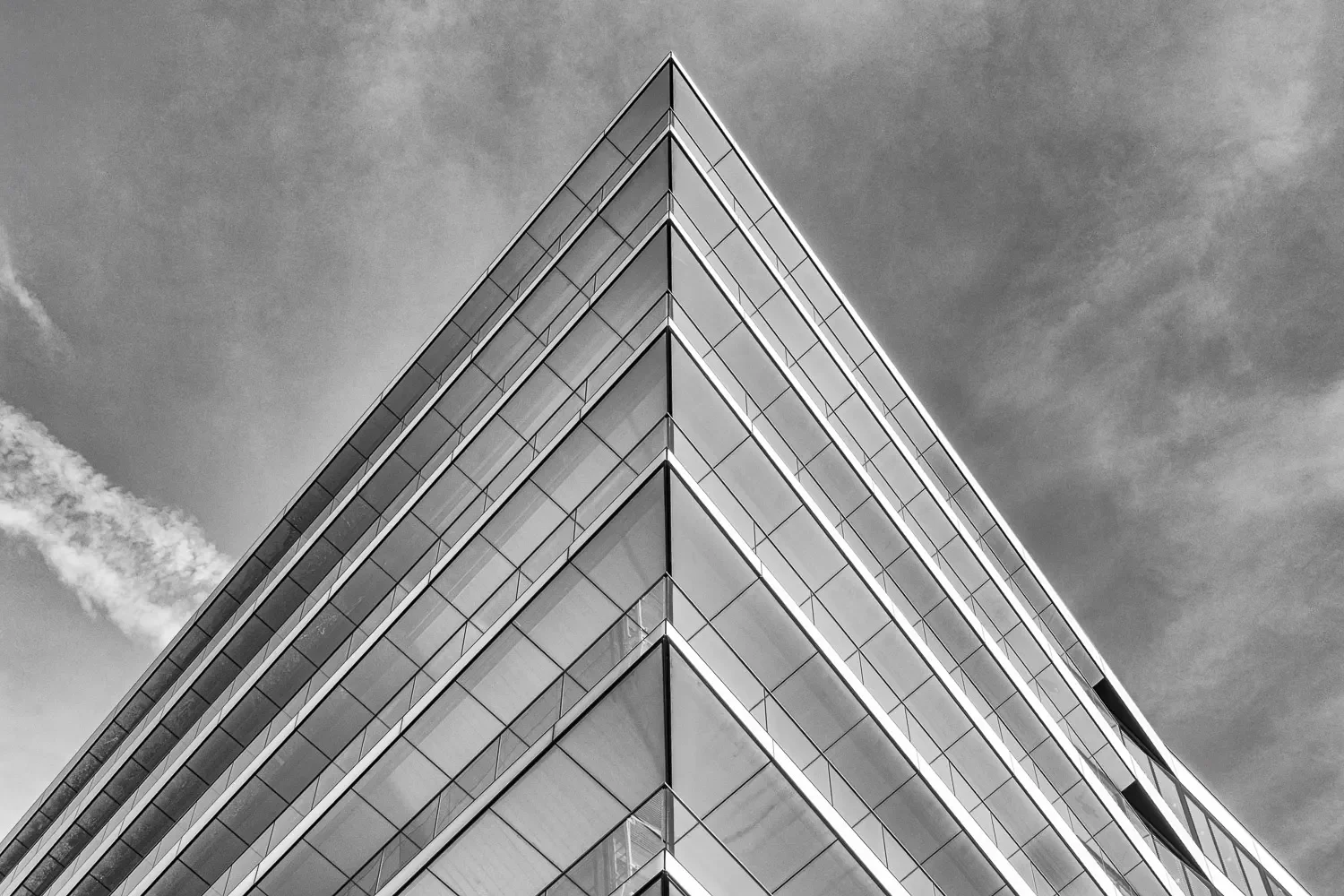
The apex of one of the City's lesser-known towers. Get low enough and even the most overlooked buildings reveal something worth seeing.
What is architectural photography?
Architectural photography is the practice of documenting and interpreting buildings, structures and urban spaces through considered composition, controlled perspective and an understanding of how light interacts with materials.
At its best, it goes beyond simple documentation. It presents a building with intention – revealing form, structure and design in a way that feels both accurate and compelling.
Whether working for architects, developers or property marketing teams, the goal is the same: to communicate the quality and character of a space with clarity and precision.
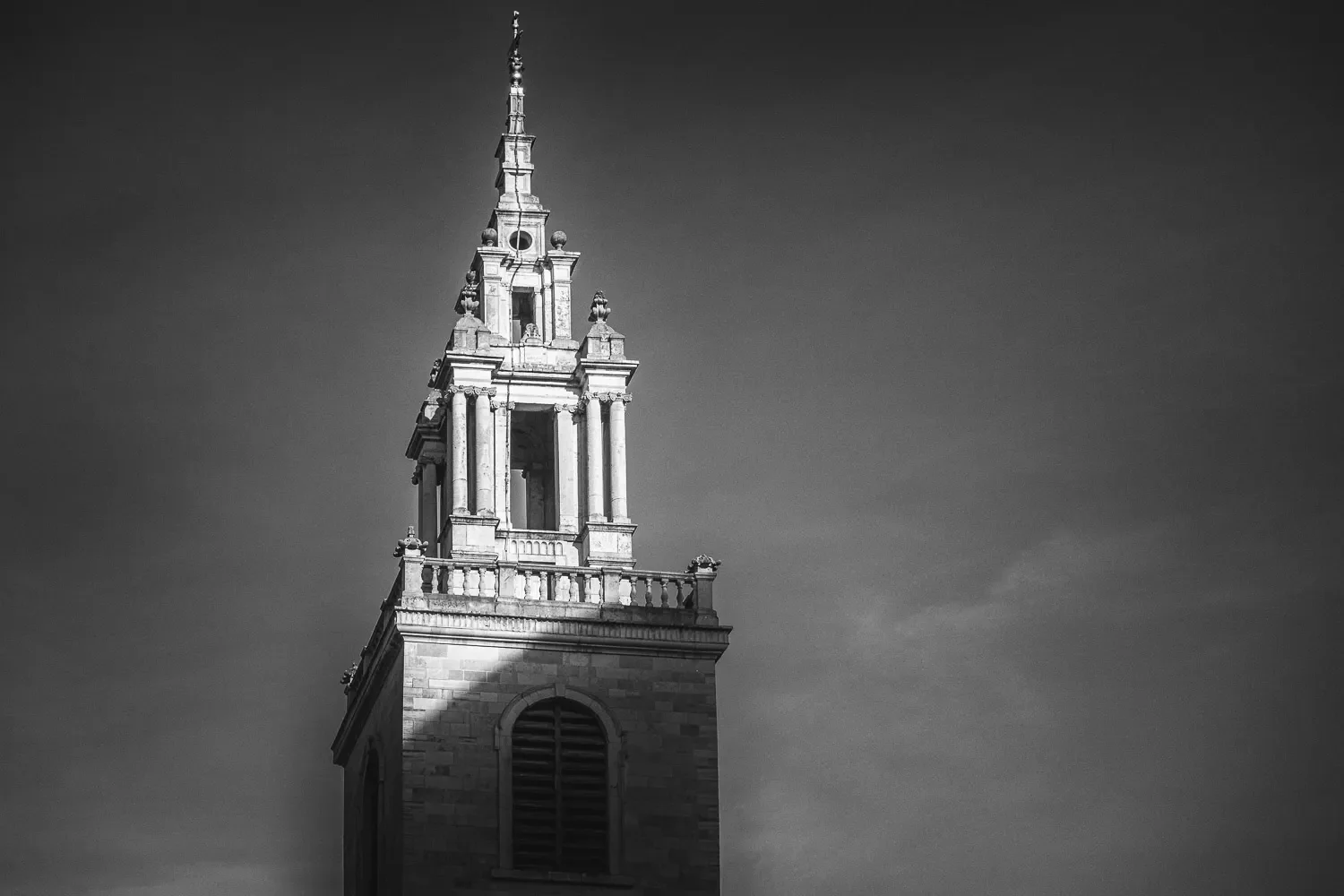
A Wren church tower holding its own against the sky. Three hundred years old and still the most elegant thing on the street.
Light as a design tool
London light is unpredictable, which makes it powerful.
Low winter sun produces hard contrast across stone façades in the City. Overcast skies flatten modern glass along the South Bank into soft tonal gradients. Late afternoon light reflects sharply off steel structures in King's Cross.
When photographing architecture, the sky is not background. It becomes an active compositional element. It frames buildings, defines edge contrast and shapes mood.
Understanding how light interacts with materials is fundamental in professional architectural photography. It determines how a development is perceived.
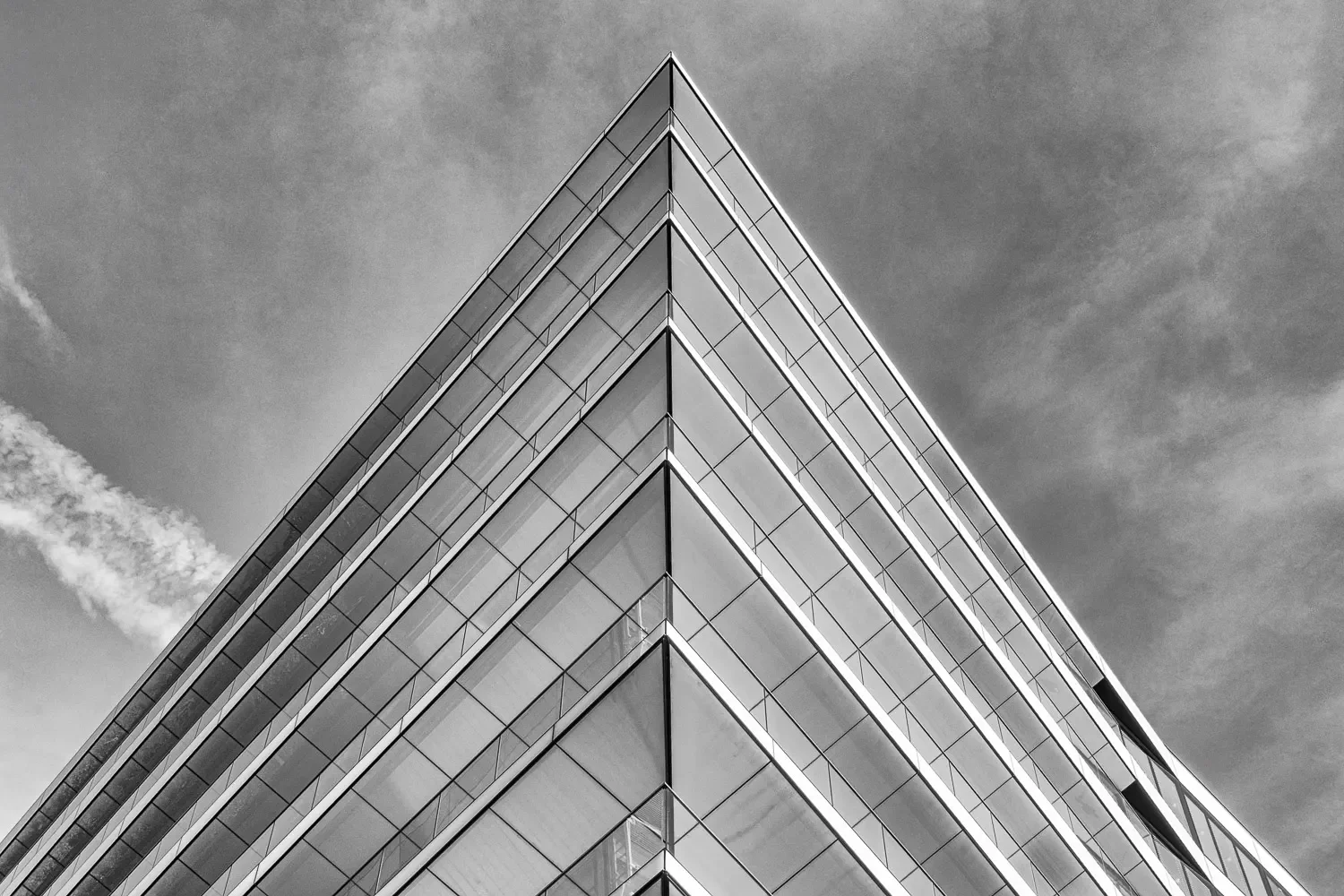
Glass and geometry. The corner of a City office building pointing straight at the clouds.
Architectural photography across London
This project continues to shape how I approach architectural and property photography across London.
Working in areas such as the City of London, the South Bank, the West End and King's Cross has reinforced the importance of clean vertical alignment, considered perspective control, patience with natural light, emphasis on material and structural detail, and compositions that feel intentional rather than incidental.
Whether photographing historic commercial buildings or contemporary residential developments, the objective is the same – present the architecture with clarity, strength and precision.
There are remarkable perspectives across London's skyline. You simply have to look up to see them.
Frequently asked questions about architectural photography in London
What makes London good for architectural photography?
The density. Within a few hundred metres in the City of London, you can move from a Wren church to Brutalist concrete to a 21st-century glass tower. The contrast between eras is compressed and constant, which means there's always something worth pointing a camera at. The light is also unpredictable in interesting ways — low winter sun hits stone differently to how an overcast sky handles glass.
Why do you shoot in black and white?
It removes the noise. London has a lot of competing visual information at street level — signage, traffic, red buses, advertising. Converting to black and white forces the eye to focus on structure, form and light. It also makes buildings from very different eras feel like part of the same visual language.
Which buildings are in the Look Up London series?
The series covers buildings across the City of London — including the Lloyd's building, 20 Fenchurch Street, and the Scalpel — along the South Bank (Tate Modern, London Bridge), and into King's Cross and the West End. The list grows each time I go out.
How do you handle distortion when photographing tall buildings?
Carefully. Converging verticals are part of the language of upward-looking photography — eliminating them entirely would feel dishonest about the perspective. The goal is to control distortion with precise positioning and minor correction in post, rather than trying to make every vertical perfectly parallel. For commercial architectural work, I'd approach this differently depending on the brief.
Can I commission architectural or property photography for a development project?
Yes. Look Up London is a personal project, but I take on commercial architectural and property photography commissions across London. If you're an architect, developer or property marketing team, I'd be glad to talk about what you need. Get in touch here.
About the photographer
Michael Dick is a photographer and designer based in St Albans, Hertfordshire. He shoots corporate portraits, personal branding and events across London and Hertfordshire, and runs Look Up London as an ongoing personal project — a long-term study of London's architecture seen from below.