
Why professional event photography coverage matters
Professional event photography across St Albans, Hertfordshire and London, from corporate conferences to community celebrations, sporting events to private parties
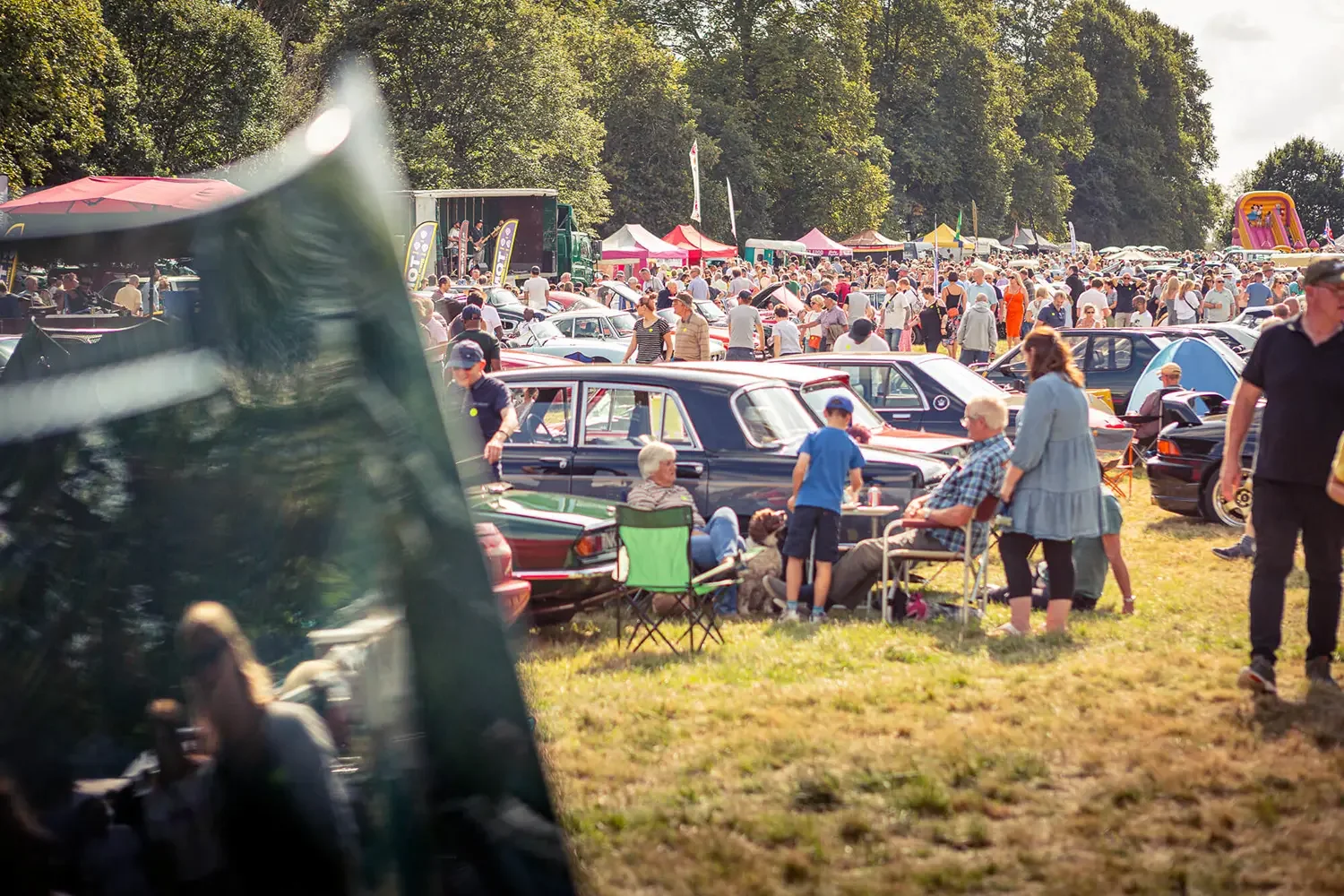
The crowds at the Redbourn Classic Motor Show – one of Hertfordshire’s best-loved community events. Wide crowd shots like this establish scale and atmosphere, showing future attendees exactly what they're missing.
Why event photography matters
Events are ephemeral by nature.
A speaker landing a line that brings the room to its feet. Two old friends catching each other’s eye across a crowded venue. A winner’s expression in the moment they hear their name called. A child watching a performance with complete, unselfconscious wonder.
These moments exist for seconds. Without a photographer who is genuinely paying attention, they’re gone.
Professional event photography isn’t about turning up with an expensive camera and pressing the shutter a lot. It’s about understanding what an event is trying to achieve, anticipating where the significant moments are going to happen before they happen, and building a set of images that tells the full story of a day, the atmosphere, the people, the details and the emotion, in a way that remains useful and resonant long after the event itself is over.
This is what I do, how I do it, and why it matters for the organisations and individuals who commission it.
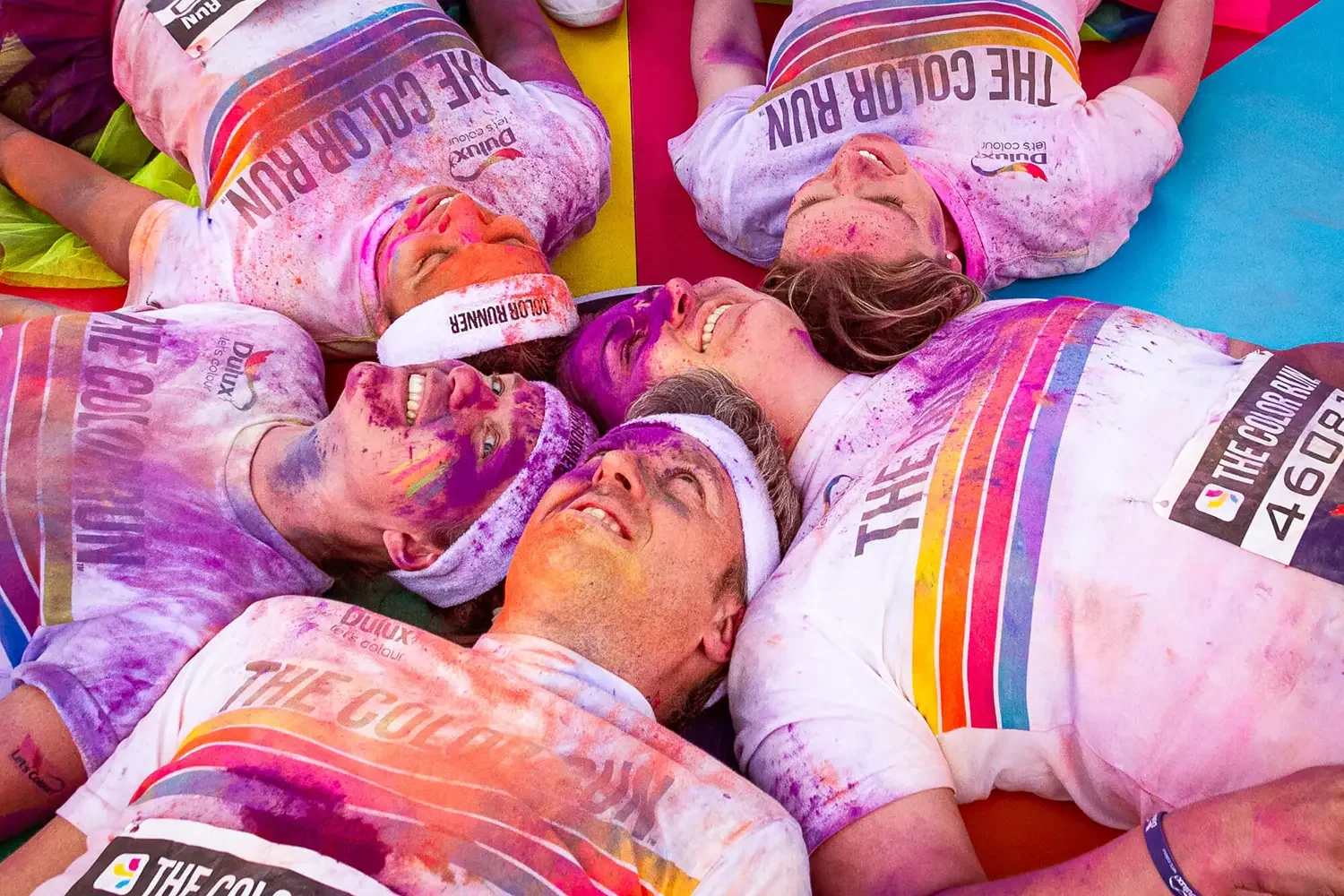
Colour, chaos and complete commitment. Participants at a colour run event, captured mid-explosion. High-energy events demand a photographer who anticipates the moment rather than reacts to it – a split second either way and this image doesn’t exist.
What event photography actually delivers
The most important thing to understand about professional event photography is that its value is almost entirely post-event. On the day itself, photographs are invisible, they don’t affect the experience of the people who are there. Their job is to serve everyone who wasn’t there, and to give the people who were there something to return to.
For businesses and organisations, that means marketing content. A well-photographed corporate conference, awards evening or product launch generates images that can populate a LinkedIn company page for months. Speaker photography, room shots, networking moments, branded environments, award presentations, each one is a piece of content with a genuine shelf life, and each one communicates something about the organisation that produced the event. That it takes itself seriously. That its events are worth attending. That real things happen there, involving real people.
For community events, sporting occasions and private celebrations, the value is different but no less significant. These are the images that end up framed on walls, shared at anniversaries, used in fundraising campaigns and community newsletters. They are the visual record of something that mattered to the people involved, and a phone camera, however capable it has become, does not produce images at the quality, consistency or compositional standard that professional photography delivers.
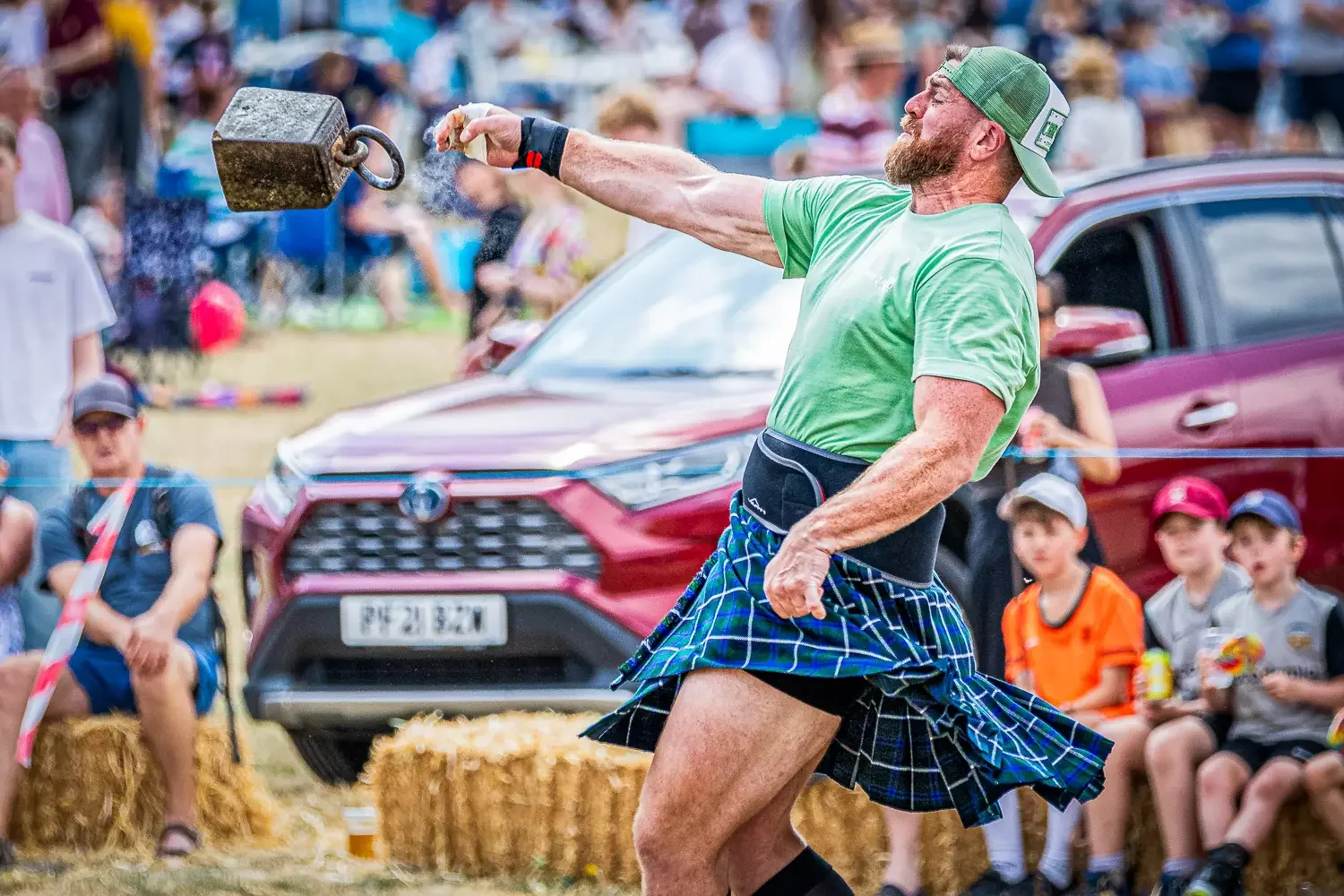
The concentration before the release – a competitor at The Highland Gathering, Harpenden, captured at the peak of the movement. Sporting event photography is about finding the human story inside the athletic one.
How I approach an event
Every event brief starts the same way: with a conversation about what the event is for and what the images need to do.
That might sound obvious, but it’s genuinely the most important part of the process. A photographer who turns up on the day without that understanding will produce a set of images that documents what happened. A photographer who understands the brief will produce a set of images that serves the purpose behind it.
For a corporate event, that usually means understanding who the key stakeholders are, which moments are non-negotiable, what the brand priorities look like visually, and what the images will be used for. For an awards ceremony, it means knowing the running order, positioning correctly for presentation moments, and building a workflow that ensures every winner is captured without exception. For a community event or sporting occasion, it means understanding the rhythm and structure of the day and identifying in advance where the strongest images are most likely to come from.
Before every event I research the venue and the format. I plan around the lighting conditions I’m likely to encounter. I identify the must-have shots and build a loose structure around them while staying flexible enough to follow whatever the day actually produces.
On the day, I work quietly and unobtrusively. At corporate events in particular, guests should be barely aware there’s a photographer in the room. People photograph better when they're not performing for the camera, candid interaction, genuine laughter, unguarded reactions produce far stronger images than posed group shots, and those are the images that get used.
After the event, images are professionally edited and delivered in formats ready for immediate use across digital and print channels.
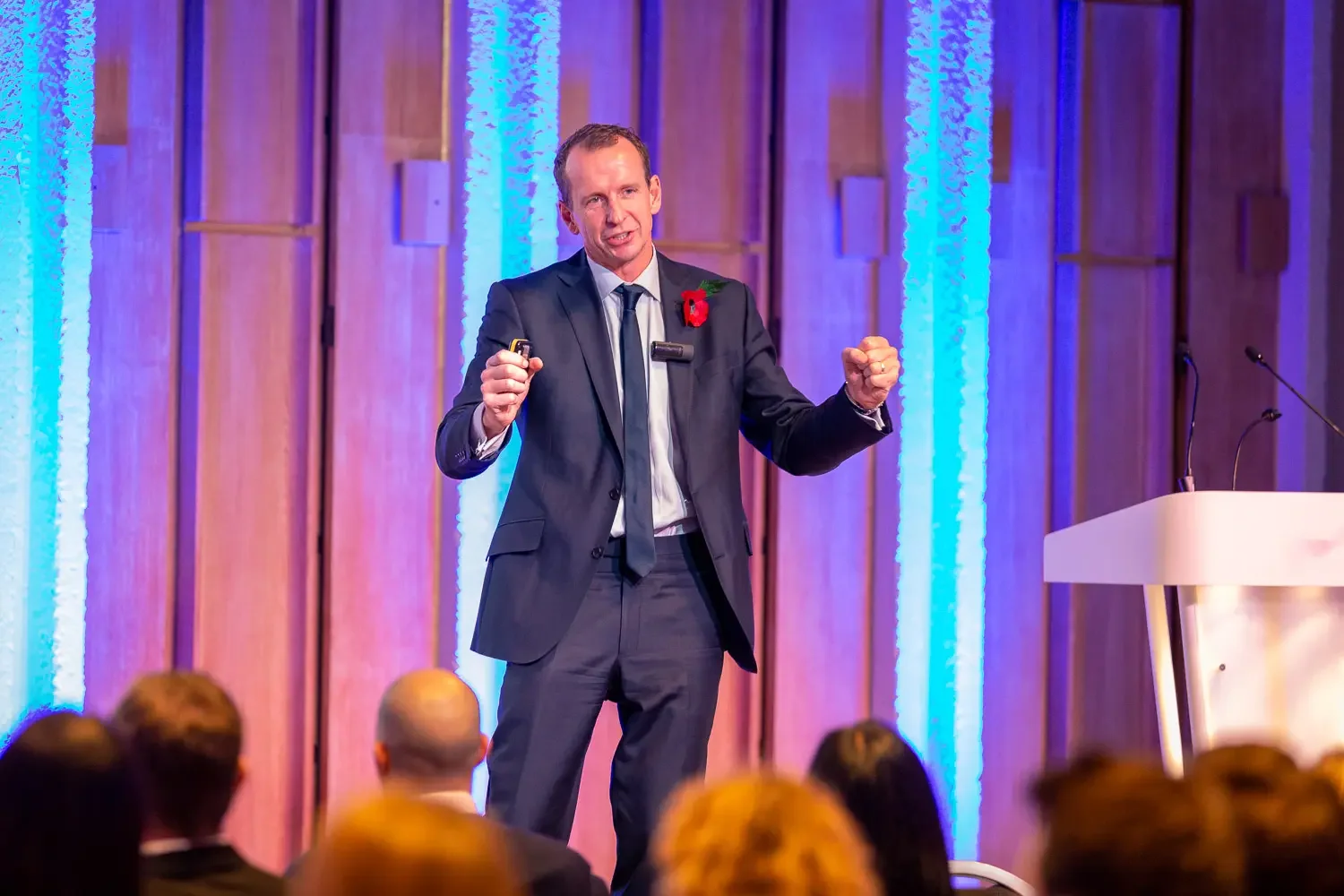
Professor Greg Whyte on stage – the kind of speaker shot that a conference organiser actually wants to use. Good stage photography means working with difficult lighting, finding the right angle, and waiting for the expression that matches the moment.
The range of events I cover
My event photography work spans a genuinely wide range of occasions, and each type brings its own demands and its own rewards.
Corporate events, conferences, awards evenings, product launches, networking events, hospitality days, are covered in more detail in a separate post, but they form a significant part of my work and draw directly on my seventeen years in corporate creative environments at Columbia Threadneedle Investments and Hogan Lovells.
Sporting events are among the most technically demanding briefs in event photography. Fast movement, unpredictable timing, challenging light and the need to capture both the action and the human story around it, the atmosphere, the supporters, the competitors in their quieter moments, requires a different skillset to corporate work. I’ve photographed large-scale sporting events including the ITU World Triathlon Series, and have had the privilege of photographing Olympic gold medallists Kate and Helen Richardson-Walsh. The discipline and instinct that kind of shooting demands informs everything else I do.
Community and cultural events, local festivals, charity occasions, civic celebrations, arts events and gallery openings, are often underserved photographically, yet they generate some of the most compelling and emotionally resonant images. The St Alban’s Day pilgrimage, local shows, seasonal events, these occasions matter to the communities they belong to and deserve photography that reflects that.
Private parties and personal celebrations, milestone birthdays, anniversaries, family gatherings, are occasions where the photography brief is entirely personal. The job is simply to preserve what the day felt like: the people, the atmosphere, the small unrepeatable moments that everyone present will want to return to.
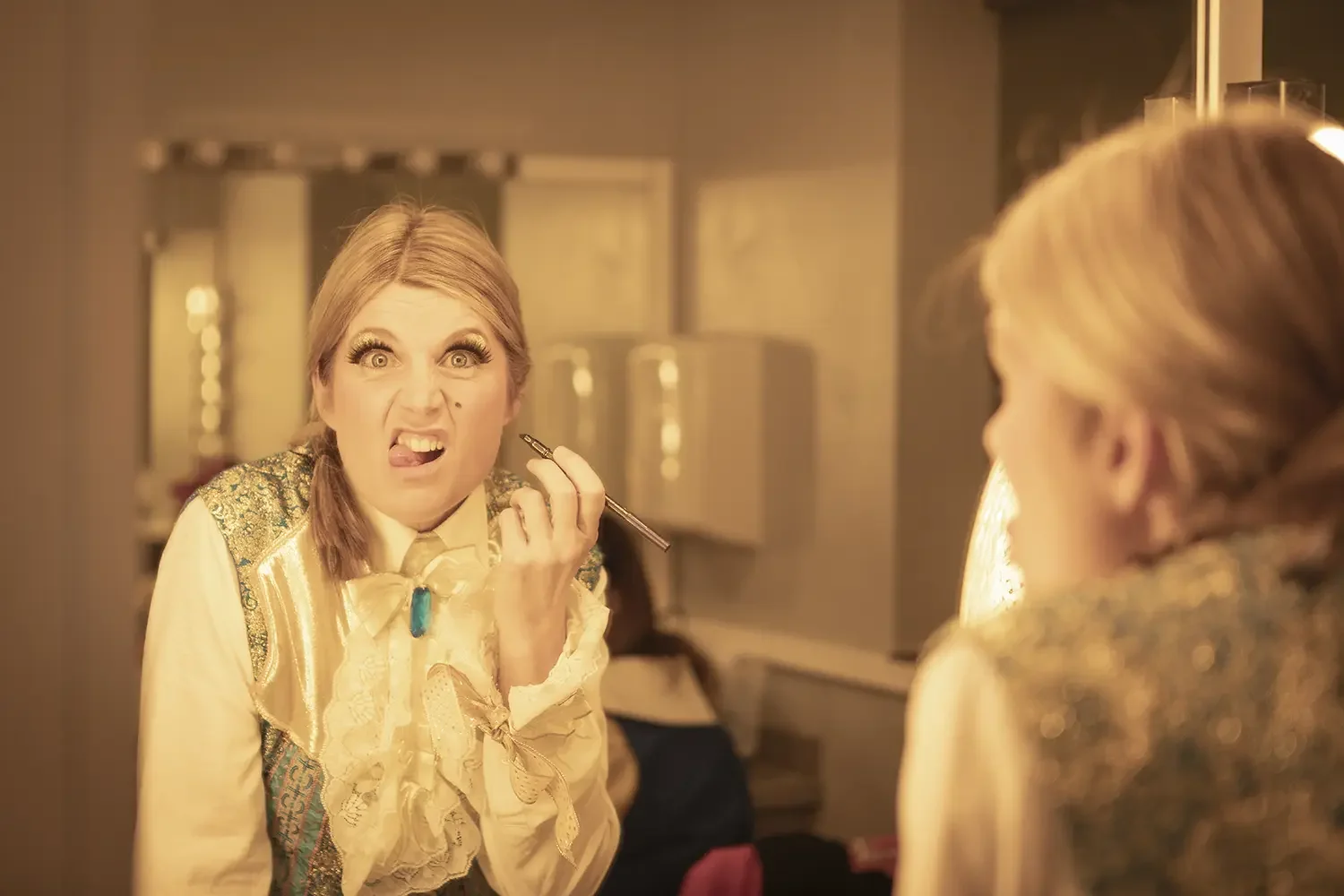
The quiet moment before the performance. Backstage and behind-the-scenes photography adds a layer of intimacy to event coverage that front-of-house shots alone can never provide.
What separates good event photography from average event photography
The honest answer is anticipation.
Any competent photographer can react to a moment after it’s happened and capture something usable. What separates strong event photography from average event photography is the ability to read a room, understand a situation, and be in the right position with the right settings before the moment occurs.
That comes partly from experience, having photographed enough different events in enough different environments to build a reliable instinct for where things are going to happen. It comes partly from preparation, knowing the brief well enough to understand which moments matter most. And it comes partly from something harder to define, a genuine interest in people and what they do, and the patience to stay present and attentive throughout a long day rather than just showing up and going through the motions.
The images that actually get used, the ones that end up on websites, in annual reports, in LinkedIn posts, framed on office walls, are almost always the ones that captured something true rather than something staged. Truth requires presence and patience. That’s what professional event photography is actually about.
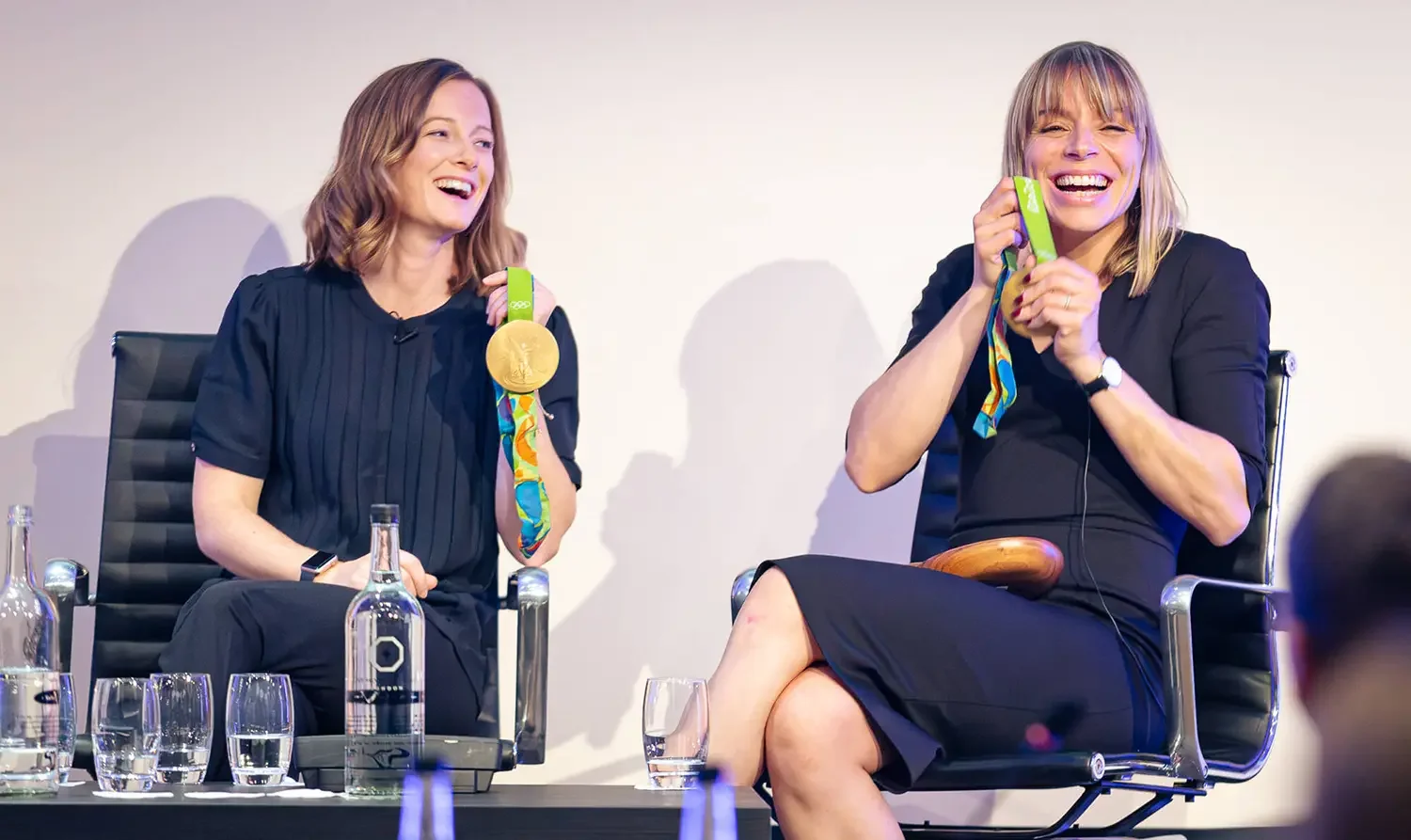
Olympic gold medallists Kate and Helen Richardson-Walsh. Photographing people at the peak of their achievement – in the moment, unguarded and genuine – is what event photography is for. These are the images people keep.
Based in St Albans, covering Hertfordshire, London and beyond

The annual St Alban's Day pilgrimage through the streets of St Albans – a community occasion with centuries of history behind it. Community and civic events are among the most photographically rewarding briefs, and among the most underserved.
I’m based in St Albans and work regularly across Hertfordshire, including Harpenden, Hemel Hempstead, Watford and Hertford, as well as London and further afield for the right brief.
If you’re planning an event and want to discuss photography coverage, I’d welcome a conversation. Get in touch with your date, venue and a brief outline of what you need, and I’ll come back to you with how I’d approach it.
Q&A
What makes event photography “professional” rather than just someone with a good camera?
It comes down to anticipation and discretion. A professional reads the room, works out where the real moments will happen before they happen, and captures them without getting in the way or making guests self-conscious. That’s the difference between images that feel staged and ones that actually show what the event was like.
Why does coverage matter more than just a handful of posed shots?
Posed shots tell you who was there. Coverage tells you what the event felt like, the reactions, the atmosphere, the unplanned moments. If you only get the formal photos, you lose everything that actually makes people want to look at the gallery afterwards.
How many images should I expect from a full day of coverage?
It depends on the length and size of the event, but a full day typically produces a highlights gallery plus a wider image library, so you've got both the standout shots for immediate use and a fuller record to draw from later.
Can these images be used for marketing as well as a record of the day?
Yes. Every image comes with full commercial usage rights, so whether it’s a website, social media, a report or a future marketing campaign, there’s no separate licensing step or extra fee.
Do you cover events across Hertfordshire, or just St Albans?
I’m based in St Albans but regularly cover events across Harpenden, Hemel Hempstead, Watford and Hertford, as well as further into London. Travel within 5 miles of St Albans is included in every package, and anything further is easily arranged.